Droplet Organoids Support Compound and CRISPR Screens

A bioRxiv preprint describes Matrigel-droplet tumor organoids used to screen more than 5,000 clinical compounds and run pooled CRISPR perturbations. The authors report candidate drug opportunities beyond genomic profiling and a UXS1-linked cell-state change in a stomach cancer model.

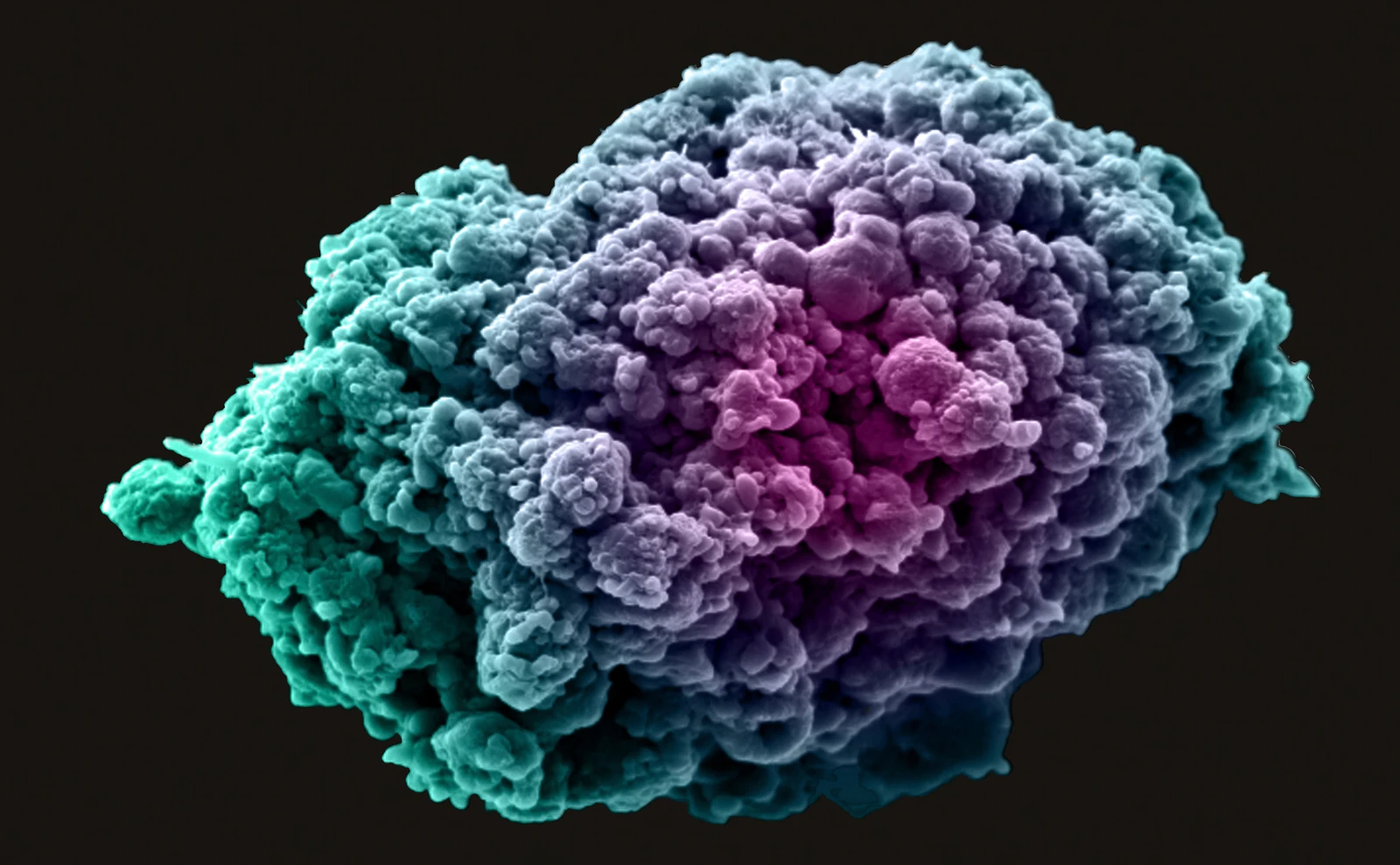
Colour-enhanced scanning electron micrograph of a three-dimensional breast-cancer cell spheroid.
A three-dimensional breast-cancer cell spheroid, imaged by scanning electron microscopy. (Khuloud T. Al-Jamal, David McCarthy & Izzat Suffian, CC BY 4.0)

Shrinking the Culture Unit

Researchers at Zhejiang Cancer Hospital and Westlake University describe encapsulating tumor cells in microscale Matrigel droplets. A vortex step produces large numbers of droplets, each acting as a small culture compartment for organoid growth. The format miniaturizes the culture unit for parallel drug and genetic screening.

Compound Screens Beyond Genomic Prioritization

Using droplet cultures, the authors report screening more than 5,000 clinical compounds across several tumor models. They say this uncovered candidate therapeutic opportunities that genomic profiling alone had not identified.

A Genetic Screen Reveals a Cell-State Shift

The preprint also describes compatibility with high-content live imaging to follow organoid responses over time. In a pooled CRISPR screen, loss of UXS1, a gene involved in nucleotide-sugar metabolism, drove a shift from a gastric toward a hepatic-like cell state in a stomach cancer model. The finding links nucleotide-sugar metabolism to a change in tumor-cell identity.

Sources

  1. Droplet-based organoid screens enable high-throughput identification of cancer vulnerabilities. bioRxiv. 2026-10-19. DOI: 10.64898/2026.10.13.744538