Research, Explained

Research & Analysis

A closer reading of the research shaping human-relevant drug discovery and evaluation.

An ECM-Rich Capsule Limits Doxorubicin Entry into HCC Spheroids

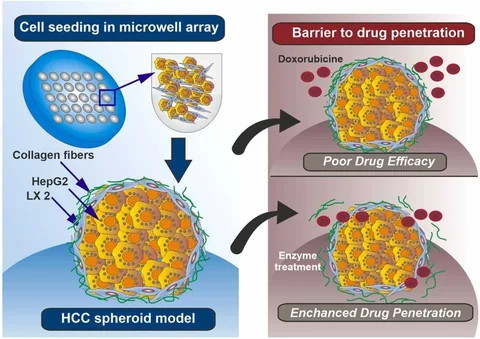
An academic team co-cultured HepG2 and hepatic stellate LX-2 cells to form a liver tumor spheroid model. Spheroids with a collagen-rich outer layer showed reduced doxorubicin penetration; disrupting that layer improved the drug response in the model.

Review Weighs Image-Analysis Tools for Spheroid and Organoid Drug Screens

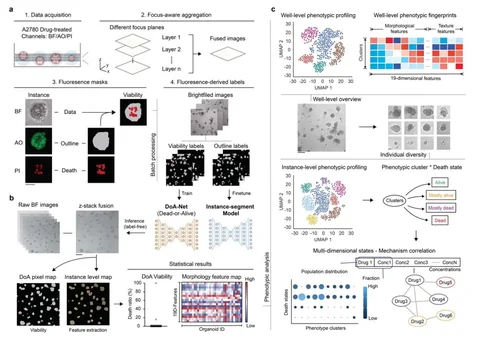
A review of bright-field and phase-contrast imaging finds different strengths and limits in rule-based, classical machine-learning and deep-learning analysis of spheroids and organoids. Dataset shifts, segmentation failures and two-dimensional projections remain practical concerns.

Droplet Organoids Support Compound and CRISPR Screens

A bioRxiv preprint describes Matrigel-droplet tumor organoids used to screen more than 5,000 clinical compounds and run pooled CRISPR perturbations. The authors report candidate drug opportunities beyond genomic profiling and a UXS1-linked cell-state change in a stomach cancer model.

Valproic Acid Changes miRNA Profiles in Human Hippocampal Organoids

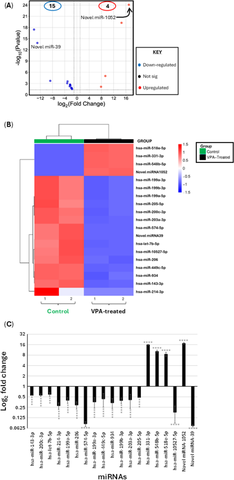
Researchers exposed human hippocampal organoids to valproic acid for four days, then profiled mRNA and miRNA. They found 19 altered miRNAs and tested selected target sequences in HEK-293T reporter cells, with limited replication from one iPSC line.

Wolman Disease Organoids Reveal a Biliary Response to Liver Injury

Isogenic human liver organoids with LIPA loss reproduced lipid accumulation and multicellular inflammatory and biliary responses with increased fibrogenic gene expression. Restoring LIPA in hepatocyte-like cells attenuated these molecular signals.

GSK3B Inhibition Improves Myelination in APOE4 Brain Organoids

Researchers linked APOE4-associated lipid accumulation in human oligodendrocytes to altered Wnt/GSK3B signaling. A GSK3B inhibitor reduced lipid droplets in cell cultures and increased myelination in brain organoids; the findings remain preclinical.

NIH Transporter Network Brings NAMs to Early-Life Exposure Questions

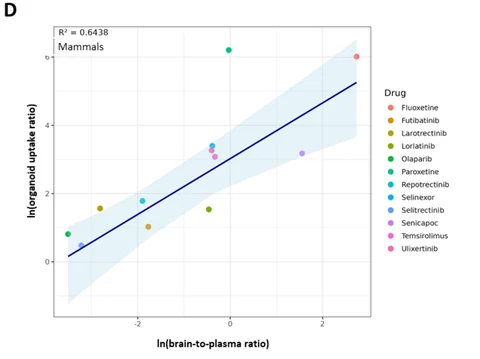
A four-center NIH network is studying transporters in the placenta, mammary gland, pediatric intestine and brain. Its published overview describes how organoids, microphysiological systems and computational models contribute to that research strategy.

FAP-Targeted IFNγ Agonists Tested in Colorectal Cancer Assembloids

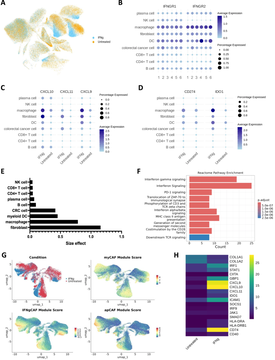
Roche used patient-derived colorectal tumor assembloids to compare its engineered FAP-targeted IFNγ agonists with recombinant IFNγ and an untargeted reference. The targeted constructs induced some immune signals with less PD-L1, while Ki67 and CD8 migration changes did not reach significance.

Cortical Organoids Show Limited Effects After Brief Acetaminophen Exposure

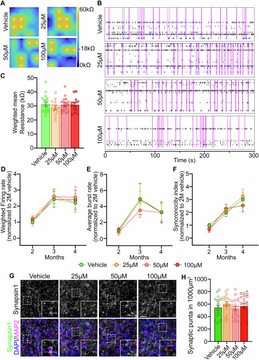
Researchers exposed human cortical organoids to acetaminophen for five days and followed structural, transcriptomic and network outcomes for several months. Small early transcriptional changes did not translate into detectable differences in later cellular composition or the measured functional endpoints.

NephroTox AI's Higher External AUC Comes With 21.7% Coverage

An academic kidney-toxicity model reached an AUC of 0.727 across 247 external compounds. Restricting the analysis to high- or medium-confidence predictions raised AUC to 0.902, but retained only 21.7% of that set.

Human Neural Spheroids Model Myelin Injury and Repair, with Clemastine as a Test Case

A spinal-cord-patterned human neural spheroid model followed myelin damage, debris clearance and new myelin formation over weeks. In a small drug comparison, clemastine increased the share of newly formed oligodendrocytes that became myelinating cells, a cellular result rather than evidence of clinical efficacy.

45-Company Survey Finds NAM Use Most Prevalent in Early Discovery

In an IQ Consortium working-group survey of 45 companies in Asia, the United States and Europe, NAM use was most prevalent in early discovery. Uncertainty about regulatory acceptance and human translatability was cited most often as a barrier.
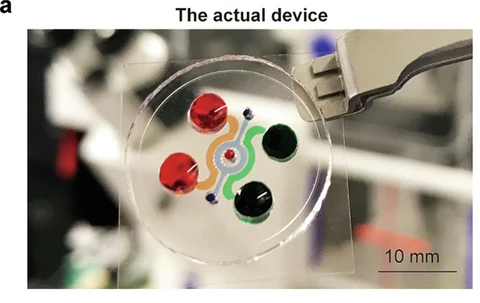
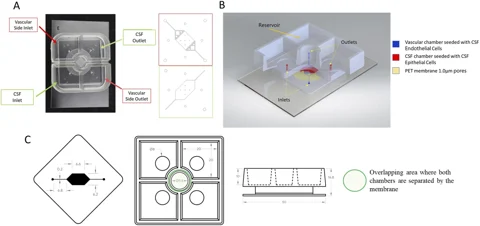
A Human Blood–CSF Barrier Chip Tracks PEG Distribution and Drug Transport

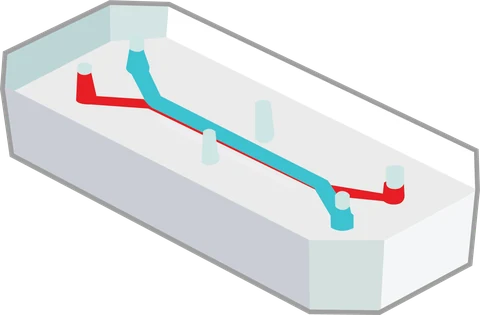
A two-compartment chip assembled from human primary cells maintained a measurable blood–cerebrospinal fluid barrier for up to 15 days. Its first applications compared the distribution of free PEG species and transport of two reference drugs; the latter comparison does not yet establish broad predictive performance.

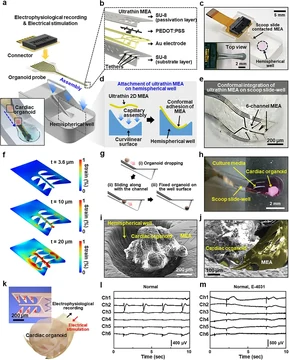
Conformable Electrodes Track Drug Responses in DMD Cardiac Organoids

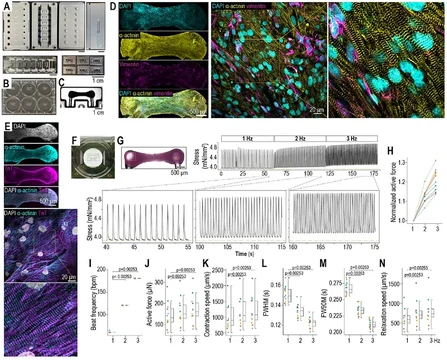
A platform built around a flexible microelectrode array and scoop-shaped well combines electrical recordings with video of tissue motion. Organoids from healthy donors and patients with Duchenne muscular dystrophy show different structural features and responses to hERG blockade.