
Lung Organoid Review Examines Antifibrotic Testing and Patient Variation
A review of lung organoids in idiopathic pulmonary fibrosis connects epithelial injury, matrix remodeling and drug-response measurements. It distinguishes the information supplied by stem-cell-derived organoids, patient-derived cultures and more complex lung models.
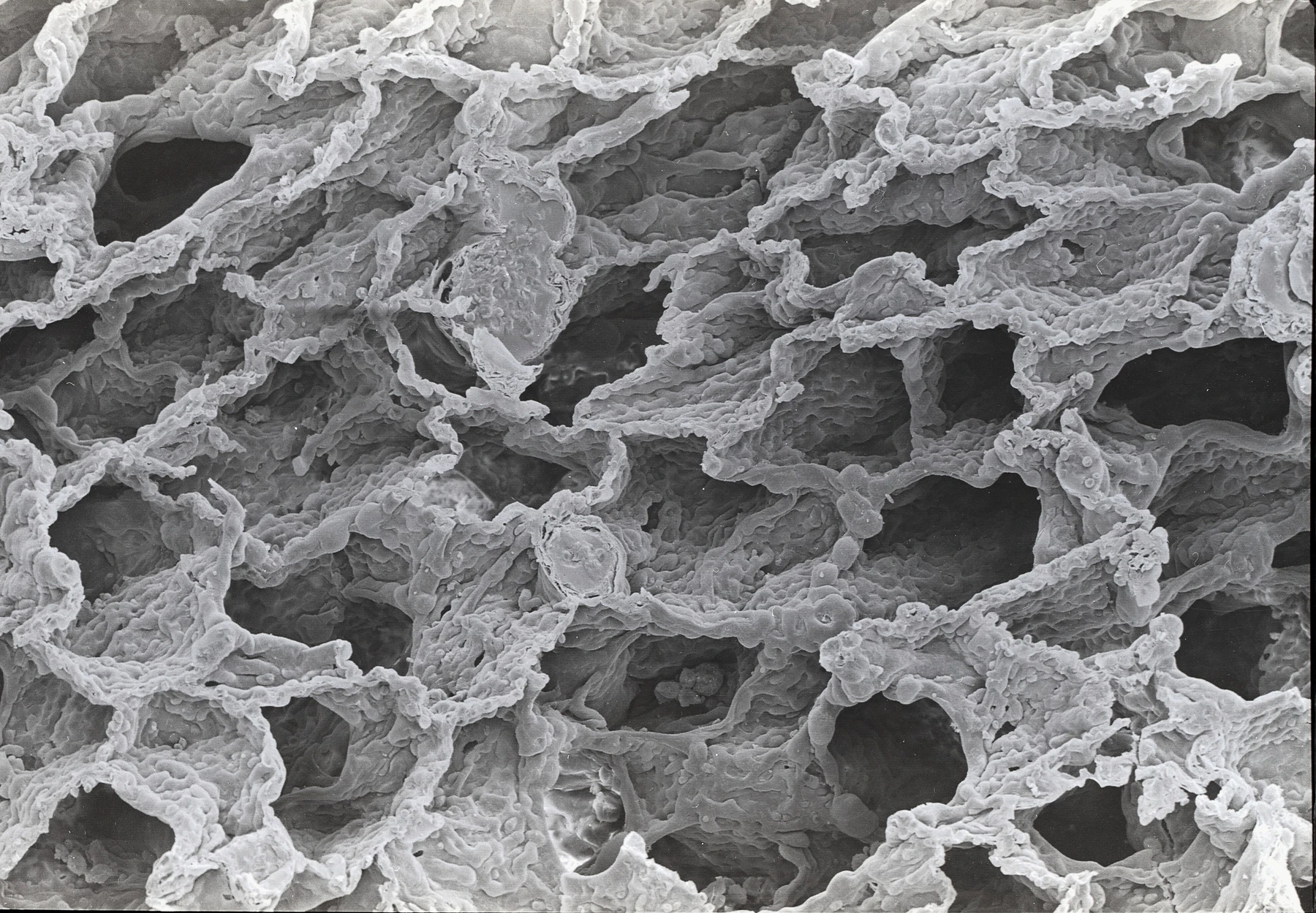
Choosing a Model for the Fibrotic Lung
Idiopathic pulmonary fibrosis involves persistent injury to alveolar epithelial cells and abnormal repair across the surrounding tissue. A review in Therapeutic Advances in Respiratory Disease examines how human lung organoids can help study those processes and evaluate antifibrotic interventions. Its organizing question is which features of the disease a model preserves: epithelial identity, fibroblast behavior, matrix properties or variation between patients.
The review brings together pluripotent-stem-cell-derived organoids, adult-stem-cell cultures and patient-derived three-dimensional lung preparations. These systems preserve different biological information. Stem-cell-derived models allow developmental pathways and selected genetic backgrounds to be investigated. Adult and patient-derived preparations can retain disease-associated cell states or exposures, while their behavior also depends on the tissue sampled and the culture conditions. Those distinctions determine which comparisons are informative.
Epithelial Injury and Matrix Remodeling
The authors describe alveolar type II epithelial cells as an important starting point for studying impaired regeneration. Their ability to maintain identity, renew themselves and support differentiated epithelial structures can be followed alongside stress and senescence-associated changes. Organoid formation, growth and lineage composition therefore contribute information beyond a single cell-survival measurement.
Fibroblasts and extracellular matrix introduce another layer. Activated fibroblasts change matrix deposition and contraction, and the mechanical environment can reinforce profibrotic cell behavior. Co-cultures make it possible to examine epithelial–mesenchymal interactions, but adding a cell population changes the question being tested. An epithelial organoid, a fibroblast-containing co-culture and a tissue-derived pulmosphere should each be described by their actual composition.
Matrix identity matters for the same reason. The review discusses how culture support, matrix stiffness and remodeling affect cell states and measured drug responses. A reduction in a fibrosis-associated signal is most informative when the untreated model has a reproducible phenotype and the treatment does not simply eliminate the cells that produce it.
What Drug Experiments Can Measure
Across the studies reviewed, antifibrotic activity is assessed through combinations of structural, molecular and functional endpoints. These include epithelial survival, organoid size or formation efficiency, matrix contraction, collagen-related expression and fibroblast activation. Examples of molecular endpoints include α-smooth muscle actin, COL1A1, fibronectin and TGF-β-responsive genes. Their interpretation depends on which cells are present and which stage of the response is measured.
The review describes experiments involving nintedanib and pirfenidone, as well as investigations of ALK5 inhibition, integrin αvβ6 blockade and other candidate mechanisms. These examples illustrate several possible sites of drug action: epithelial stress, fibroblast activation and communication between those compartments. The review synthesizes the cited experiments; it does not report a new head-to-head screening study of these interventions.
The authors also discuss patient-linked pulmosphere and organoid studies in which responses varied between donor-derived cultures. Such experiments can preserve differences that disappear when results are averaged across a single standardized cell source. They also create practical questions about sampling, successful culture establishment and whether the tested cells represent the patient's diseased tissue sufficiently well.
Linking Culture Responses with Patient Outcomes
Patient-derived cultures are particularly relevant to heterogeneous disease, but the clinical connections described in the review remain limited to relatively small studies. The authors separate the observation that cultures respond differently to antifibrotic drugs from the further task of showing that those differences predict treatment outcomes. Prospective comparisons with lung-function trajectories, imaging and clinical follow-up would strengthen that connection.
The review identifies incomplete maturation, limited vascular and immune components, batch variability and inconsistent measurement practices as recurring constraints. More complex assembloids and lung-on-chip systems may address particular missing components, provided that their additional complexity is matched to the experimental objective. Standardized characterization of cellular composition, baseline injury and treatment response is central to making results comparable.
For drug research, the main contribution of this review is a way to organize model selection around the biological question. Epithelial regeneration, matrix remodeling and individual treatment response require related but distinct experimental settings. Keeping those settings explicit helps researchers select endpoints that reveal how an intervention acts and identify the patient-linked evidence still needed for translation.