
PPTN Suppresses Cervical Cancer Cell and Organoid Growth with Changes in cAMP Signaling
The P2Y14 receptor antagonist PPTN reduced growth and increased membrane-damage measurements in cervical cancer cells and organoids. Higher cAMP and PKA/CREB phosphorylation accompanied the response, while CK13 staining remained unchanged.
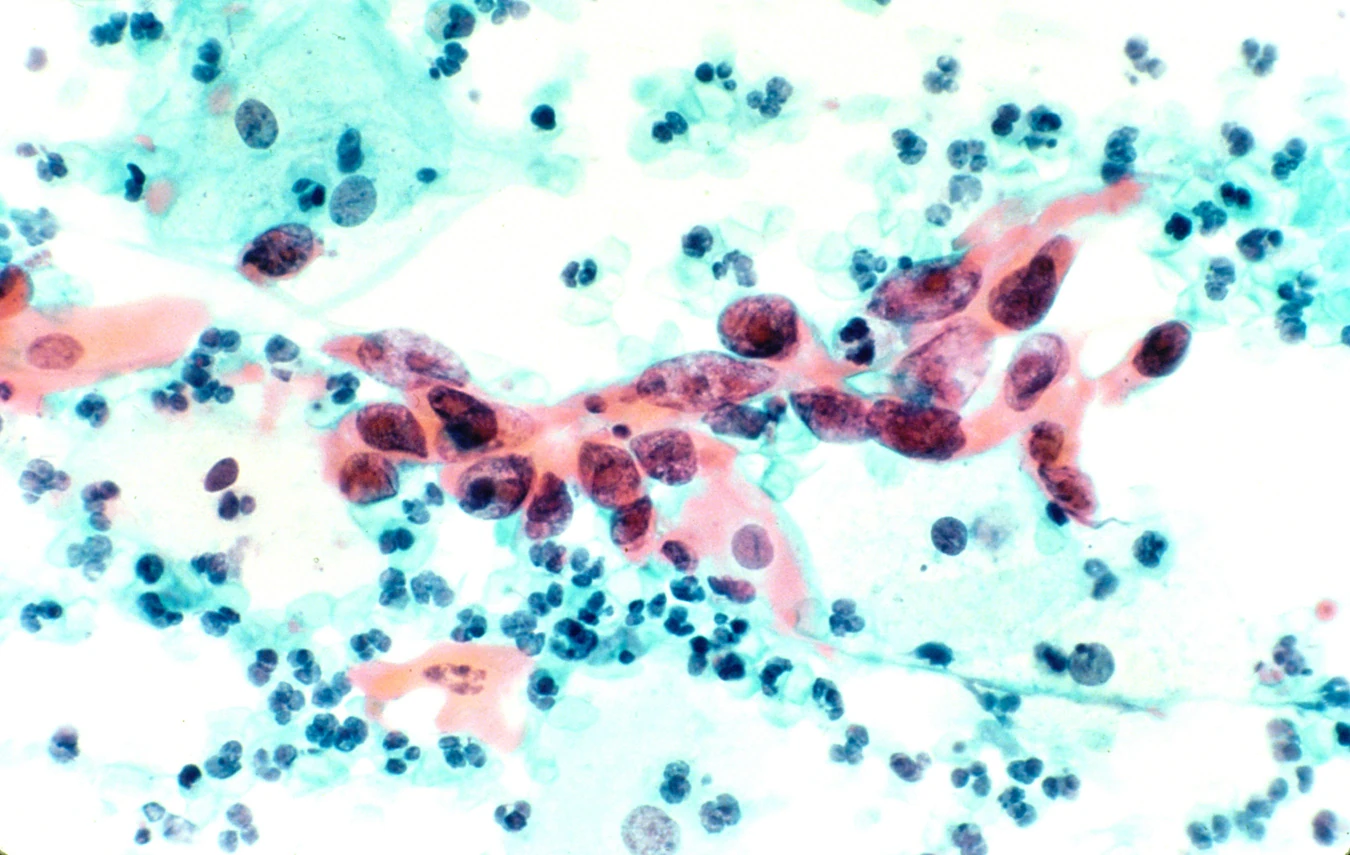
Testing a Purinergic-Receptor Antagonist in Two Model Formats
Researchers at Chengdu University of Traditional Chinese Medicine and Sichuan Science City Hospital examined whether the purinergic receptor P2Y14 could be a pharmacological target in cervical cancer. Their study in Purinergic Signalling compared the antagonist PPTN in two established human cervical cancer cell lines and a three-dimensional cervical cancer organoid culture. It connected growth and membrane-integrity measurements with changes in a signaling pathway downstream of this receptor.
The two cell lines represented different human papillomavirus backgrounds: HeLa cells are HPV18-positive and SiHa cells are HPV16-positive. The organoids and related culture reagents were supplied by AimingMed. Treatment and control cultures were drawn from the same passage and tested on the same day. The organoid experiments provide a further culture context, but the paper does not define a patient cohort from which population-level response frequencies can be calculated.
Growth, Membrane Damage and Differentiation Markers
PPTN reduced the cell-viability assay signal after 6, 12 and 24 hours in both cell lines. At 24 hours, the reported half-maximal inhibitory concentrations were 6.869 μM for HeLa and 10.66 μM for SiHa. Subsequent experiments used 3 μM and 5 μM, respectively, after rounding approximately half of each value. These were separate cell-line-specific exposures, not a common dose for all models.
The organoid assay used a longer exposure. Its 72-hour IC50 was 34.88 μM, and subsequent organoid experiments used 17 μM PPTN. Treated organoids showed reduced viability and morphological evidence of damage. Colony-formation assays in the cell lines provided a longer-term growth endpoint alongside the shorter viability measurements.
Lactate dehydrogenase release increased in cell lines and organoids, supporting a loss of membrane integrity. In the cell lines, the largest cytotoxicity measurement occurred at the 6-hour observation. This result complements the decrease in growth-associated assay signals; it does not require treating every reduction in metabolic activity as cell death.
Immunofluorescence added a distinction within the organoid response. PPTN reduced the proliferation-associated marker Ki67, whereas CK13 expression showed no obvious change. CK13 is associated with squamous differentiation in this setting. The combination supports reduced proliferative activity without a detectable shift in this particular differentiation marker. As the authors acknowledge, one marker cannot characterize the entire differentiation state.
A Signaling Association with Receptor Specificity Still to Resolve
The investigators measured intracellular cyclic adenosine monophosphate, or cAMP, by ELISA and normalized it to sample protein. PPTN increased cAMP in both cell lines and organoids. Immunoblotting also showed greater phosphorylation of protein kinase A and CREB, consistent with activation of the cAMP/PKA/CREB signaling axis under the tested conditions.
The direction fits the receptor’s coupling to inhibitory G proteins: blocking a pathway that suppresses adenylyl cyclase can increase cAMP. Nevertheless, the study did not genetically remove or restore P2Y14. The authors identify knockdown and overexpression as necessary follow-up work to establish how specifically receptor antagonism accounts for PPTN’s antiproliferative action. The measured signaling changes and growth response therefore remain linked pharmacological observations rather than a fully resolved causal chain.
All reported antitumor experiments were performed in vitro. The required PPTN concentrations were in the micromolar range, which the authors identify as a limitation for further clinical development. Genetic P2Y14 knockdown or overexpression would test the receptor-specific contribution to the observed growth and signaling responses, while animal studies would address activity beyond the cultures.