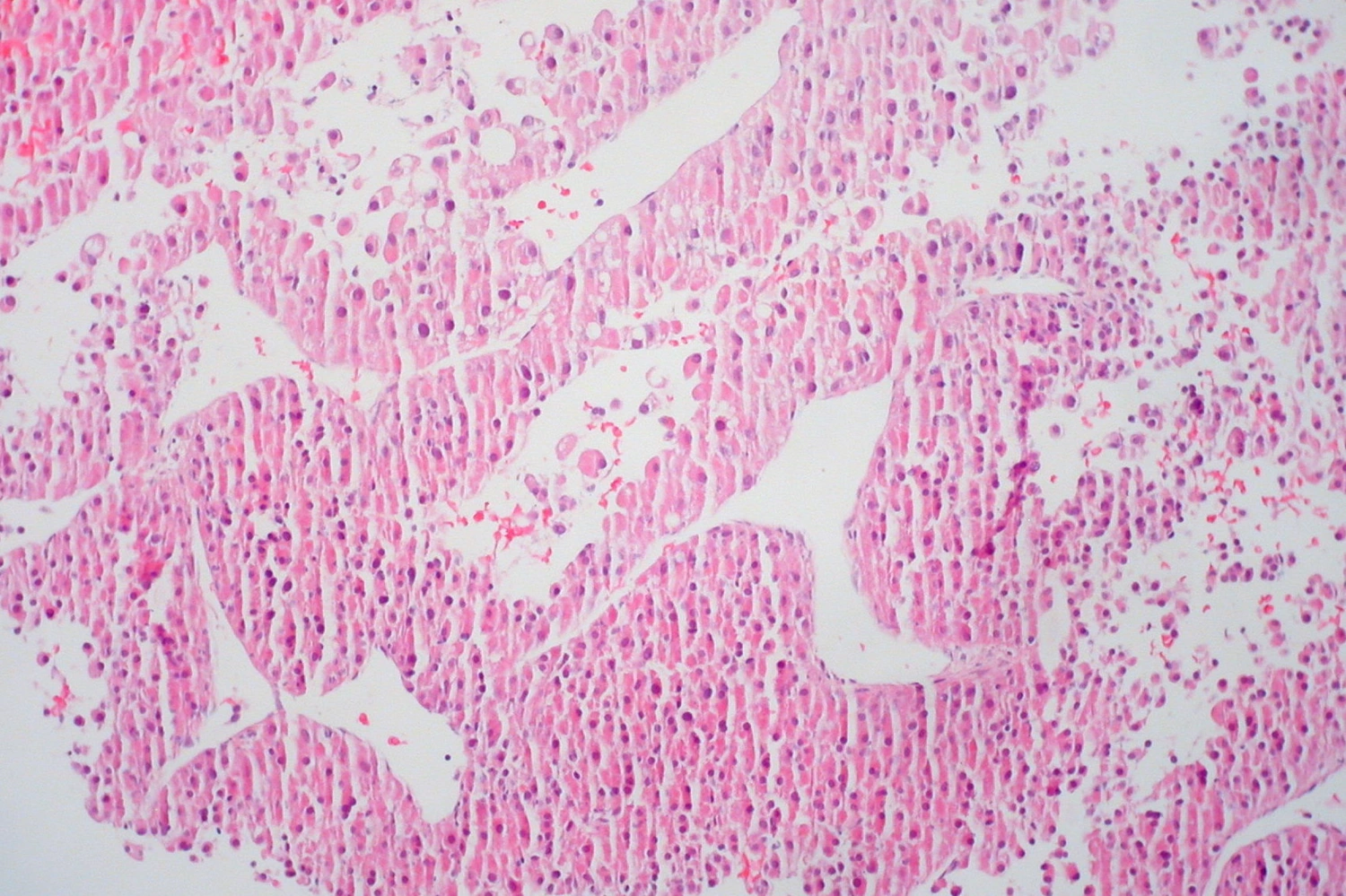
Exploratory drug-response and clinical-association assessment for liver-directed idarubicin treatment.
Model & Design
Biopsy-derived HCC and adjacent nontumor liver organoids from the single-center TACTida trial: 17 tumor and 25 nontumor cultures were established.
Experimental Format
Six-day organoid growth followed by 24-hour idarubicin exposure. Doxorubicin, cell-death, expression and secretion measurements were separate follow-up experiments.
Model Components
Component
Biological models
Description
65 biopsies yielded 42 cultures. Tumor organoids were obtained for 15 of 28 patients and nontumor organoids for 20 of 28.
Component
Drug-response readouts
Description
Idarubicin 0–100 μM with CellTiter-Glo 3D ATP measurement; doxorubicin 0–500 μM. Live/dead, qPCR and AFP/TGF-β1 ELISA were separate assays.
Measurements & Endpoints
ATP-based viability and IC50
Live/dead staining
Stress-response and proliferation-associated transcripts
AFP and TGF-β1 secretion
Necrosis and mRECIST clinical response
Analysis
Fit dose-response curves separately for tumor and nontumor cultures; compare matched culture sensitivity and test tumor IC50 against post-TACE response variables.
Published Evidence
Study Design
Paired tumor/nontumor pharmacology and exploratory clinical association.
Study Sample
17 paired culture comparisons. The Results describe a doxorubicin comparison for 8 patients; qPCR used 7 patients and secretion analysis used 6.
Idarubicin sensitivity varied widely. Tumor cultures were more sensitive in 7 comparisons, nontumor cultures in 7 and comparable in 3. Tumor IC50 was not significantly associated with TACE response.
Interpretation & Limits
A 24-hour spatially uniform exposure does not reproduce embolization, ischemia or heterogeneous local drug retention.
Culture establishment was incomplete and may select tumor subpopulations.
The clinical association comes from a small exploratory cohort with incomplete culture establishment.
Paired tumor and nontumor liver organoids showed broad variation in idarubicin sensitivity. In this small clinical cohort, tumor-organoid IC50 did not significantly correlate with necrosis or radiological response after idarubicin-based chemoembolization.