Human Motor Assembloid Hypoxia Model with NAD⁺-Pathway Comparisons
Assemble human motor-neuron spheroids with skeletal-muscle bundles, validate coupled activity, induce intermittent-hypoxia injury and compare distinct NAD⁺-metabolism interventions.
Brain & Neural ModelsEngineered Human Tissues
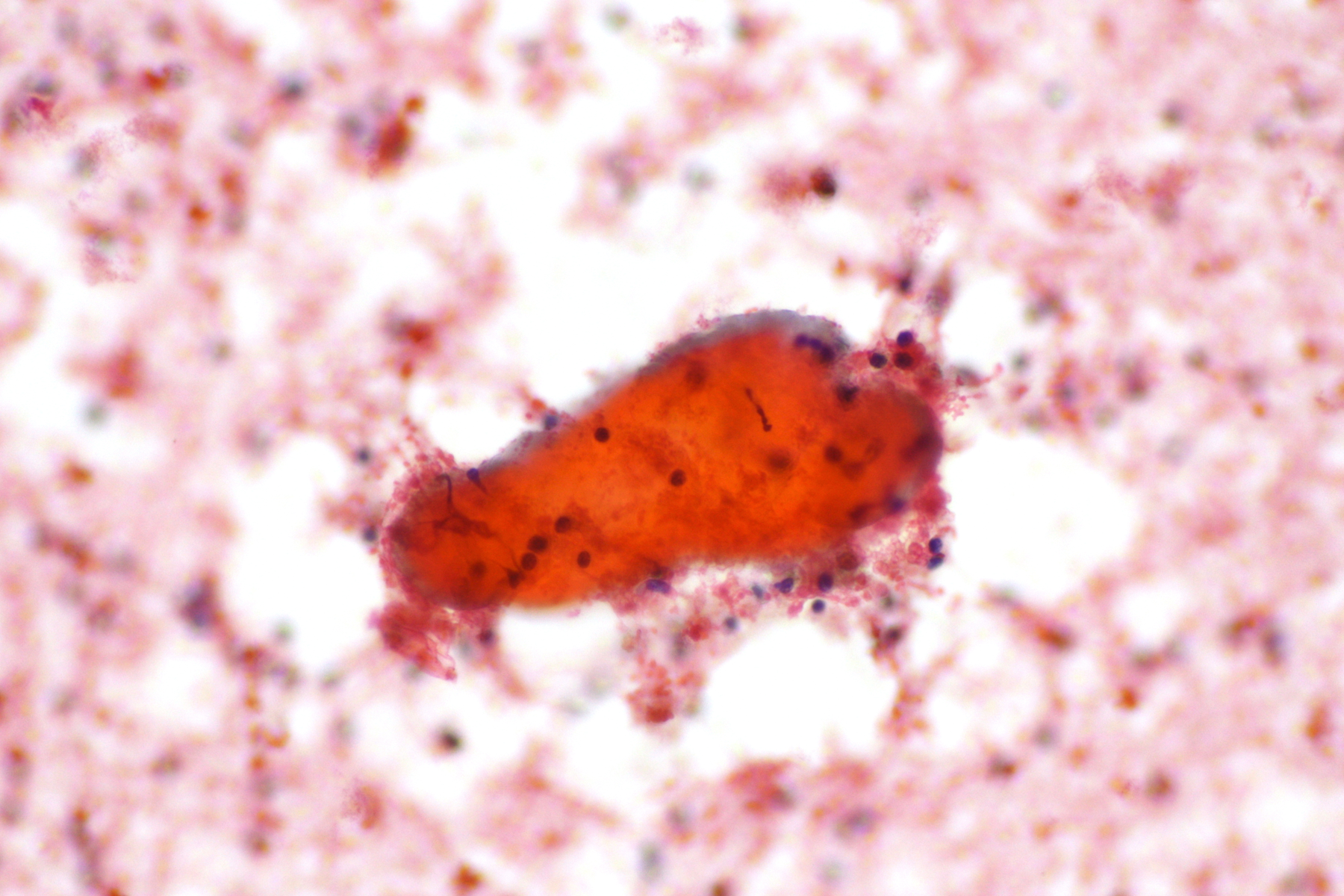
Skeletal muscle in a lateral-neck fine-needle aspirate, stained with hematoxylin and eosin. (Nephron, CC BY-SA 4.0)
Research Applications
Explore neuromuscular injury mechanisms and distinguish biochemical from functional treatment effects.
Model & Design
CAS-cell-bank human induced pluripotent stem cells differentiated into motor-neuron spheroids plus purchased human skeletal-muscle cells; three to four spheroids per bundle. Mouse C2C12 cells were confined to a separate formation test.
Experimental Format
Patterned open PDMS device; four-day intermittent hypoxia, cycling 40 minutes at 1% oxygen and 20 minutes at 21%; separate electrical, movement and structural endpoints, plus NMN, NAT and 78c NAD/ATP comparisons.
Model Components
Component
Human tissue components
Description
Motor-neuron spheroids from CAS DYR0100 iPSCs and Lifeline FC-0091 skeletal-muscle cells; normoxic and component-only comparisons.
Compare component and assembled tissues, functional and structural responses, and individual metabolic drug endpoints. MUSCLEMOTION software quantifies contraction from changes in image pixels; electrode activity has limited coverage in three dimensions.
Published Evidence
Study Design
Validate coupled neuronal–muscle responses, induce intermittent-hypoxia injury and compare three metabolic interventions.
Study Sample
Contraction/assembled activity n = 4 assembloids; whole-construct RNA sequencing: 5 hypoxia and 4 control constructs; NAD⁺/NADH/ATP drug readouts n = 3 independent experiments.
Comparison
Normoxia, component-only constructs, neuronal stimulation with or without curare, and hypoxia with the three NAD-pathway agents.
Finding
Hypoxia impaired neural/contractile outputs despite some preserved axon measures. 78c corrected NAD⁺/NADH balance, NMN mainly restored ATP, and NAT had negligible effects. Post-treatment recovery of contraction/network function was not demonstrated.
Interpretation & Limits
Incomplete axonal penetration and indirect activation of noninnervated fibers.
Monolayer-oriented electrodes and transfer limit three-dimensional recording coverage.
Commercial human-cell backgrounds without patient-specific disease matching.
Biochemical drug readouts do not establish restoration of the measured motor deficits; the cited main-text comparison does not specify the full exposure regimen.
A human neuron–muscle construct developed functional neuromuscular connections and hypoxia-related deficits. In a proof-of-concept drug comparison, 78c and NMN improved different NAD⁺/ATP measurements, while the NAMPT activator NAT had little effect; restoration of motor function was not demonstrated by those biochemical results.