Native-Immune Lung ALI Organoids for Checkpoint and Radiation Comparisons
Compare lung-cancer culture formats and use a short native-immune window for pembrolizumab and radiation–STING testing.
LungOrganoids
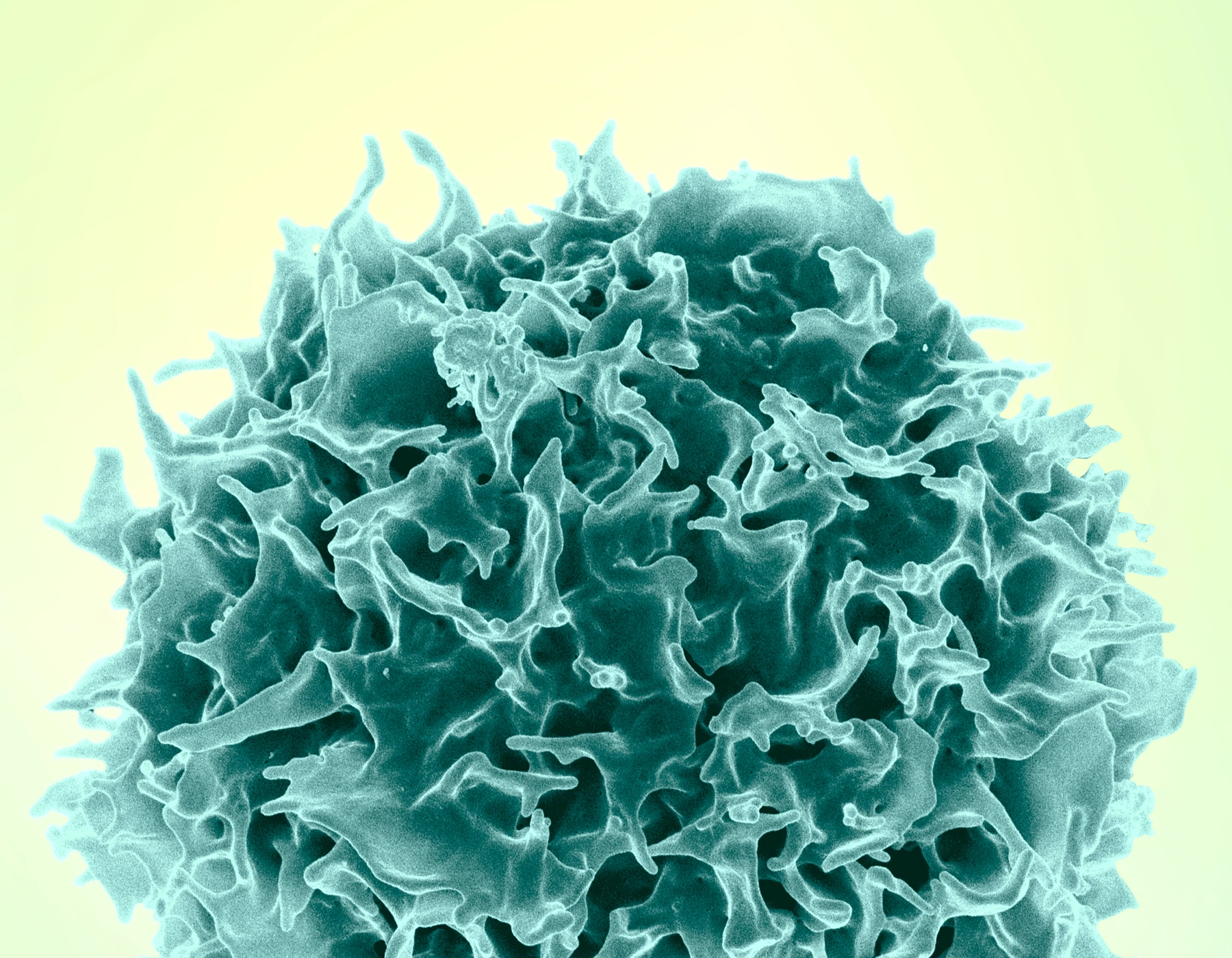
Colorized scanning electron micrograph of a healthy T lymphocyte. (NIAID, CC BY 2.0)
Research Applications
Preclinical treatment comparison with retained endogenous immune cells and explicit passage limits.
Model & Design
Patient lung-cancer cell-based ALI organoids compared with minced-tissue ALI and conventional domes, with or without IL-2.
Experimental Format
Culture yield and immune retention characterization, day-15 single-cell profiling, seven-day pembrolizumab assay and radiation follow-up to day 24.
Model Components
Component
Drug and radiation comparisons
Description
Pembrolizumab 10 μg/mL versus IgG4 for seven days. Radiation 0/4/8/16 Gy; four models tested diABZI 5 μM for two hours daily for four days after radiation, against monotherapies.
Component
Readouts
Description
Organoid formation/area, immune fractions, single-cell composition, granzyme B/IFNγ and IFIT1/IFIT2/IFNB1 expression. Native immune abundance and culture state decline with passage.
Measurements & Endpoints
Organoid establishment and area
Immune retention and cell states
Checkpoint-associated viability and immune markers
Radiation–STING structural and expression response
Analysis
Evaluate formation in paired formats and use first-passage cultures for treatment comparisons. Keep immune composition, cytokine/granzyme changes and structural collapse as distinct outcomes.
Published Evidence
Study Sample
16/19 cultures established; direct method comparison four patients, matched immune comparison three, pembrolizumab five and radiation–STING four. The single-cell donor count was not specified.
Comparison
Tissue ALI, domes ± IL-2, IgG4, radiation and diABZI monotherapies.
Finding
Cell-based ALI improved paired formation and immune retention. IL-2 did not significantly improve overall primary immune fractions and impaired subsequent organoid growth. Pembrolizumab responses occurred in two of five models; radiation plus diABZI caused greater collapse than either treatment alone.
Interpretation & Limits
Native immune fractions decline and cultured cell states differ from source tissue.
No paired clinical checkpoint-response validation; a population-rate comparison does not validate individual prediction.
Small treatment subsets and area endpoints do not establish clinical radiation dose reduction.
Study Design
Primary study comparisons of the stated models, treatments and measurements.
A cell-based air–liquid interface culture retained endogenous immune cells more effectively than dome culture, although immune content declined with passage. Small model subsets tested pembrolizumab, radiation and a radiation–STING-agonist combination without validating clinical checkpoint-response prediction.