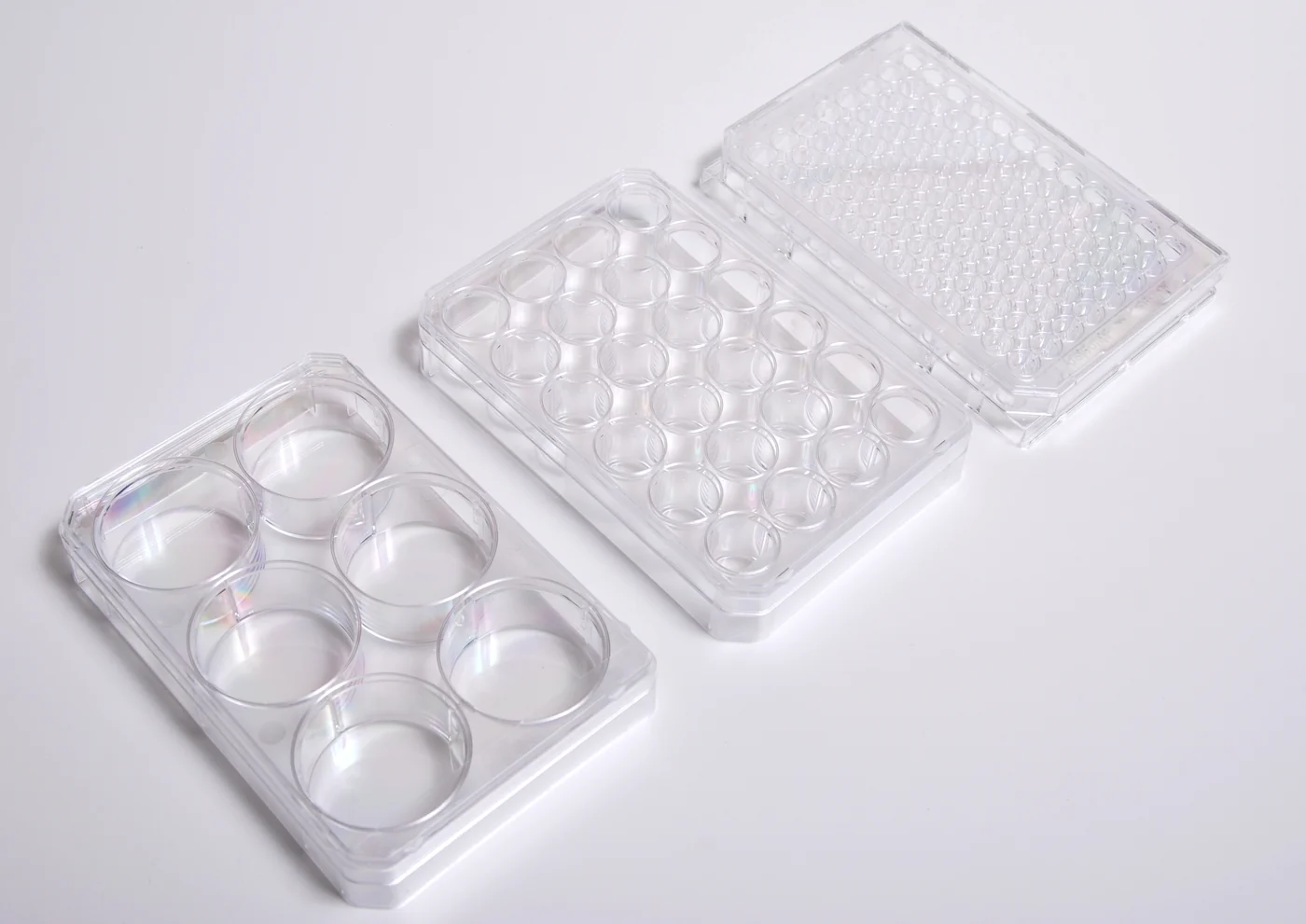
Multiwell plates used for cell-culture experiments. (Lilly_M , CC BY-SA 3.0 ) Research Applications Investigate stromal contributions to chemotherapy resistance in lung adenocarcinoma.
Model & Design Treatment-naïve lung adenocarcinoma organoids and matched cancer-associated fibroblasts.
Model Components Component Matched models
Description Tumor organoids and fibroblasts from the same patient-derived tumor material.
Component Mechanistic comparison
Description PLAU-positive fibroblast state, CXCL5 signaling and CLGN perturbation.
Measurements & Endpoints Drug sensitivity in organoid–fibroblast coculture PLAU/CXCL5/CLGN signaling Response after CLGN removal Analysis Connect the coculture drug-response change with the candidate fibroblast-to-tumor signal.
Published Evidence Study Design Paired tumor–stroma model comparison and CLGN perturbation.
Study Sample Patient-derived lung adenocarcinoma organoids and patient-matched cancer-associated fibroblasts.
Comparison Organoid drug response with or without fibroblast coculture and after CLGN removal.
Finding Fibroblast coculture reduced sensitivity, while CLGN removal restored drug response.
Interpretation & Limits Patient survival and in vitro response are separate comparisons.