Explore patient-to-patient differences in direct tumor-cell drug responses while identifying drug classes that need a vascular or stromal context.
Model & Design
Tumor-derived spheroids established from 12 of 19 patient samples; the standard-of-care combination screen covered eight models.
Experimental Format
Concentration–response drug screens with viability measurements; selected standard-of-care combinations measured after three days.
Model Components
Component
Tumor models
Description
Twelve established spheroid cultures from nineteen metastatic colorectal cancer samples.
Component
Drug groups
Description
Forty-two anticancer small molecules, five standard-of-care agents and selected drug combinations; VEGFR inhibitors examined separately.
Component
Readouts
Description
Calcein-stained area or ATP-based viability and concentration–response area-under-the-curve measures, compared with available genomic and clinical treatment records closest to sample collection.
Measurements & Endpoints
Model-establishment success
Time to drug-screen result
Drug-response curve area
Comparison with available treatment histories
Analysis
Separate direct tumor-cell effects from treatments acting through vascular or other microenvironmental components. A clinical-treatment comparison is not interchangeable with an ex vivo assay using a different intervention.
Published Evidence
Study Design
Patient-derived spheroid drug screening with selected genomic and retrospective clinical comparisons.
Study Sample
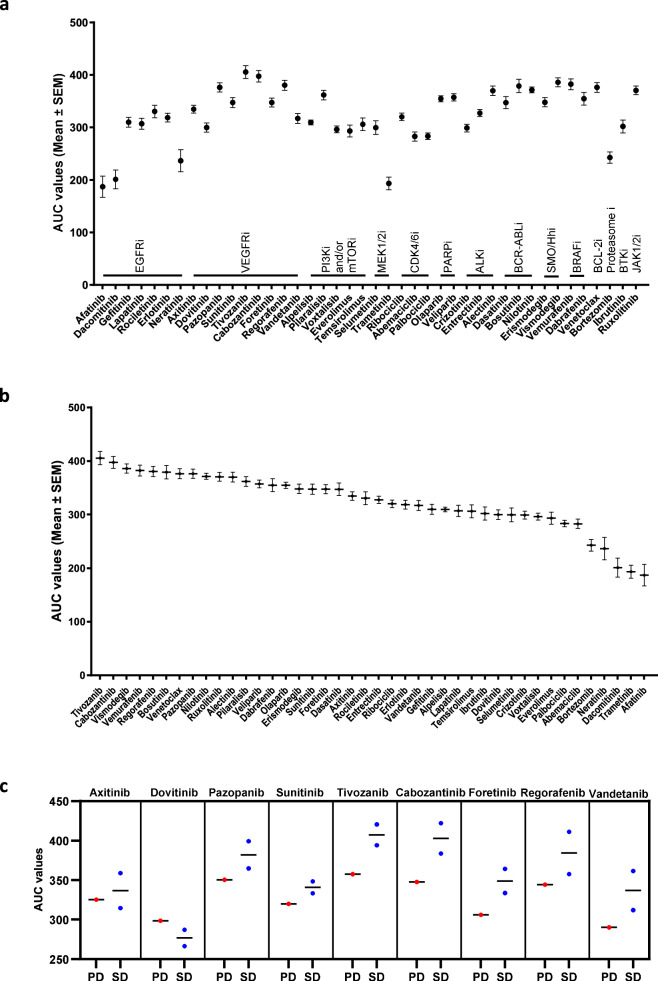
12 established models from 19 samples; eight models for standard-of-care combinations; one matched fresh/frozen model; three patients in the antiangiogenic clinical comparison.
Comparison
Within-model drug response curves, genotype and treatment histories closest to sample collection; ex vivo VEGFR inhibitors versus clinical chemotherapy plus bevacizumab in the small antiangiogenic comparison.
Finding
Some anti-EGFR and chemotherapy responses varied by patient. VEGFR inhibitors showed little direct spheroid viability effect and did not reproduce the three-patient antiangiogenic clinical grouping.
Interpretation & Limits
No vascular compartment in the spheroids.
Ex vivo VEGFR inhibitors and the clinical bevacizumab-containing regimen were different interventions.
A Luxembourg team established spheroids from 12 of 19 metastatic colorectal cancer samples. Drug profiling captured several tumor-cell responses, but VEGFR inhibitor readouts did not reflect the small available clinical comparison for antiangiogenic therapy.