Repeated Cisplatin Injury in Adult Renal Tubuloids with Conditioned-Medium Bioassays
Primary human renal tubuloids undergo repeated low-dose cisplatin injury, followed by separate human lung and mouse kidney fibroblast assays.
KidneyOrganoids
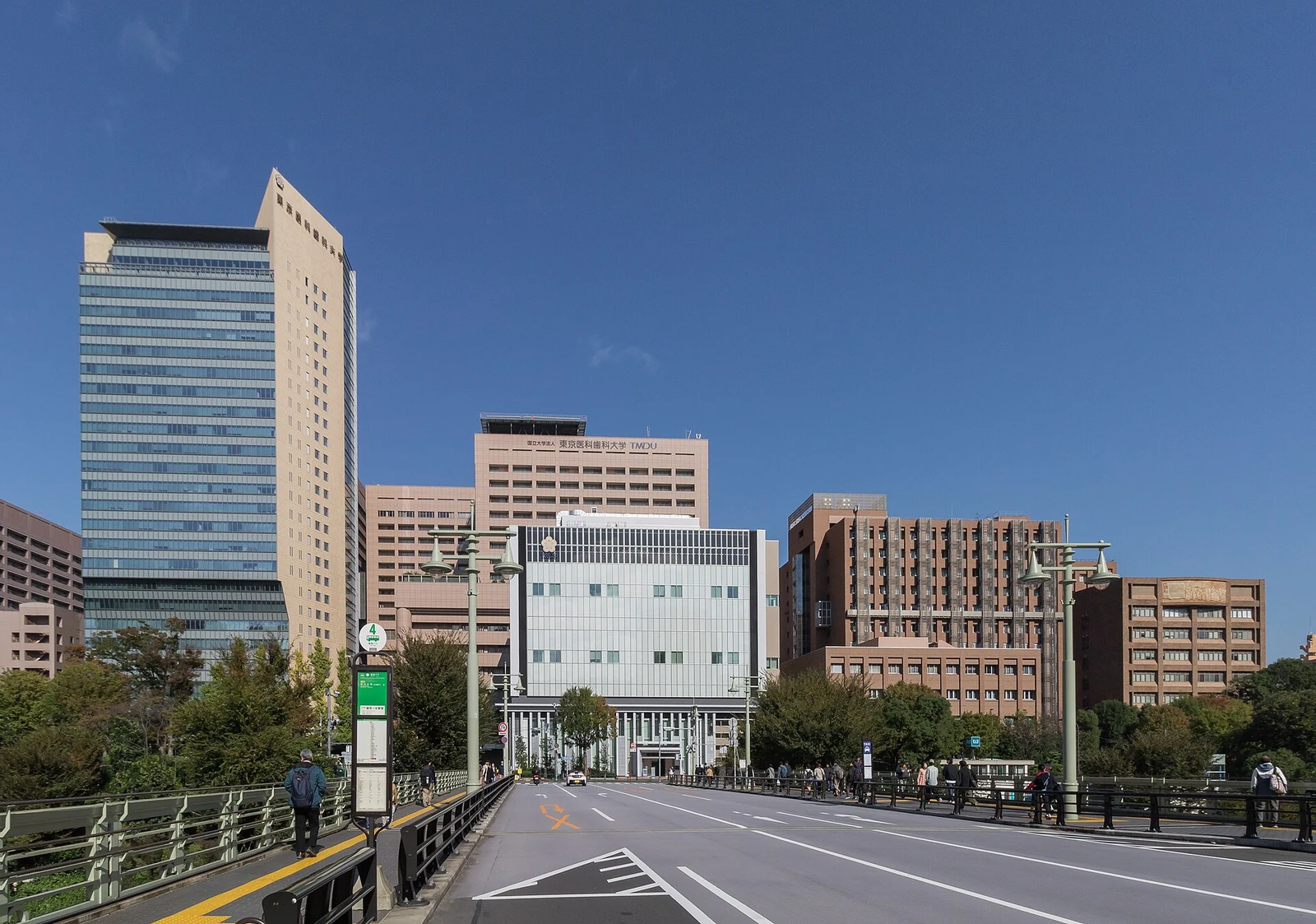
The former Tokyo Medical and Dental University campus, photographed in November 2024. (Kakidai, CC BY-SA 4.0)
Research Applications
Investigate persistent epithelial injury and transferable fibroblast-activating effects in drug nephrotoxicity research.
Model & Design
Primary renal proximal tubular epithelial cells from tumor-free adult nephrectomy cortex, expanded before 1–2 week tubuloid formation; matrix/FBS-supported epithelial layers with predominantly proximal-like expression.
Experimental Format
Acute 0.2, 2.0 and 20.0 μg/mL cisplatin comparison; five repeated 0.2/2.0 μg/mL cycles with drug removal/recovery; 48-hour serum-free conditioned-medium collection after final treatment.
Model Components
Component
Recipient cells
Description
Commercial human lung fibroblasts and, in a separate arm, mouse primary kidney fibroblasts. Conditioned medium is transferred after the tubuloid injury phase.
Component
Transfer controls
Description
Untreated-tubuloid conditioned medium and direct cisplatin-containing medium; recipient 48-hour marker assay, 24-hour collagen-gel contraction and migration assays.
Measurements & Endpoints
γH2AX, KIM1, cleaved caspase 3, LRP2 and Na+/K+-ATPase
SA-β-gal, p16/p21/p53, lamin B1 and cell cycle
IL-1β/IL-6 transcripts
Recipient α-SMA/collagen I
Fibroblast contraction and migration
Analysis
Biochemical samples pool multiple tubuloids from a culture well. Cytokine transcript fold changes, secreted-protein concentrations and recipient-cell function are distinct measurements.
Published Evidence
Study Design
Acute/high-dose versus repeated/lower-dose epithelial response followed by transferable-medium and direct-drug recipient comparisons.
Study Sample
Four bulk-RNA tubuloid samples; protein assays n = 3–5, recipient marker areas n = 8–10; contraction and migration each n = 2. The article does not specify an overall donor total.
Comparison
Untreated, 0.2/2.0/20.0 μg/mL acute injury, repeated lower-dose injury, conditioned medium versus direct cisplatin.
Finding
High-dose cisplatin collapsed tubuloid architecture. Repeated lower doses increased senescence-associated markers, G2/M arrest and IL-1β/IL-6 RNA approximately 50–100 fold. Conditioned medium from tubuloids repeatedly exposed to 2.0 μg/mL cisplatin most strongly activated fibroblast markers, contraction and migration; direct drug did not reproduce the human fibroblast marker response.
Interpretation & Limits
No individual secreted factor was shown necessary by neutralization or similar causal testing.
Human recipient fibroblasts came from lung; mouse kidney fibroblasts form a distinct species/organ arm.
Small n = 2 functional assays and incomplete donor-level replication information.
No vascular, flow or integrated whole-kidney chronic disease context.
Adult kidney-derived tubuloids developed DNA damage, senescence-associated changes and inflammatory transcripts after repeated cisplatin exposure. Their conditioned medium activated human lung fibroblasts and mouse kidney fibroblasts, whereas direct cisplatin did not reproduce the human fibroblast response.