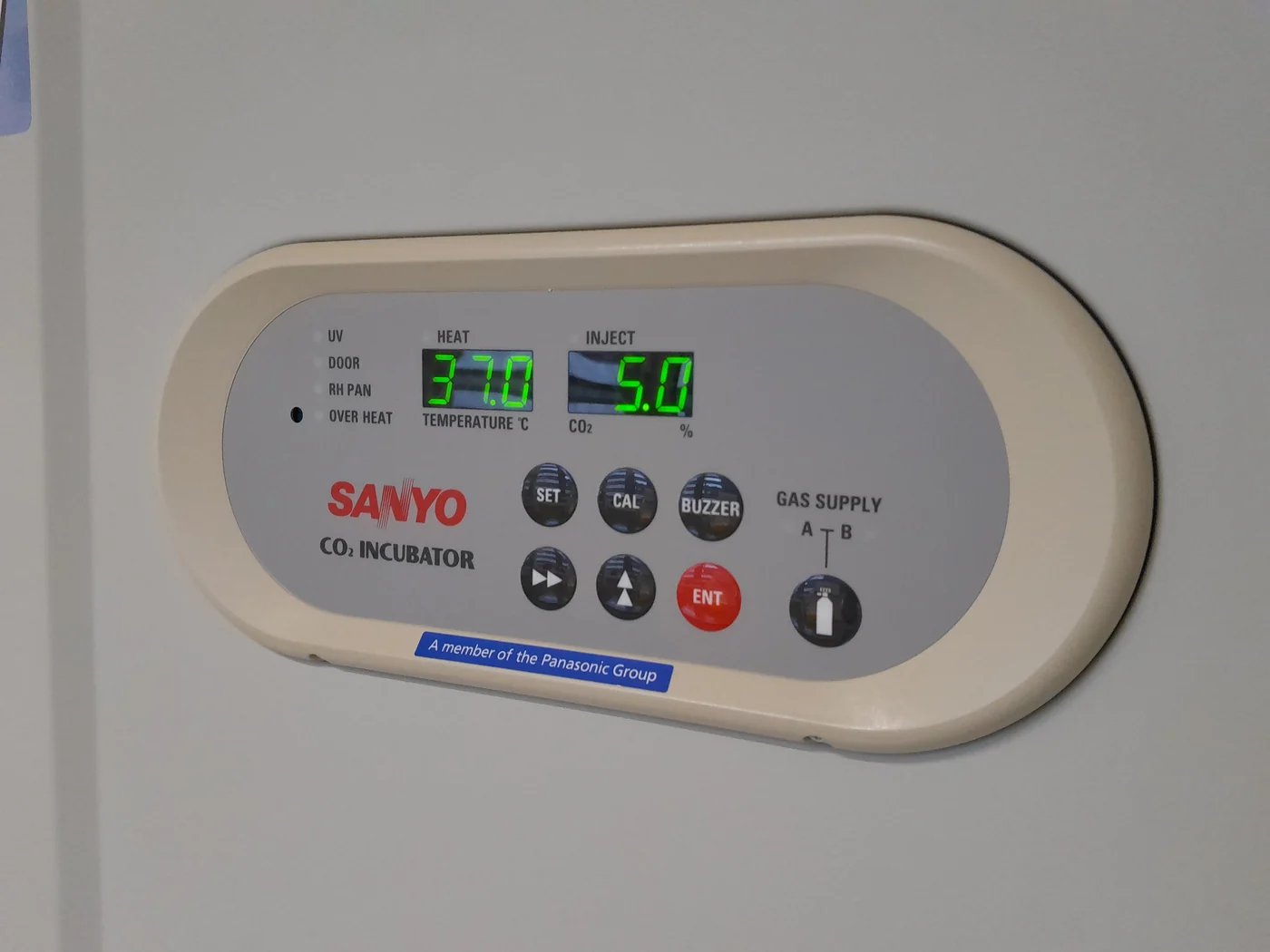
Control panel of a CO₂ cell-culture incubator. (Darja.Lavogina , CC BY-SA 4.0 ) Research Applications Study stromal–vascular contributions to chemotherapy and antiangiogenic drug activity.
Model & Design Patient-derived synovial sarcoma organoids and cancer-associated fibroblasts combined with human umbilical vein endothelial cells.
Model Components Component Tumor models
Description Synovial sarcoma organoid lines established within a 24-line collection.
Component Microenvironment
Description Patient-derived cancer-associated fibroblasts and laboratory-source HUVECs.
Component Drugs
Description Doxorubicin alone or with ifosfamide or anlotinib; additional pazopanib and vorinostat comparisons.
Measurements & Endpoints Concentration-response IC50 and tumor viability Vessel area, junction number and total vessel length Treatment-associated transcriptional programs Analysis Compare matched patient-derived cultures across formats, then relate tumor response to vascular disruption and the relevant molecular measurements.
Published Evidence Study Design Paired tumor-only and stromal–vascular drug testing.
Study Sample Three paired models in the doxorubicin IC50 table; one representative clinical comparison.
Comparison Conventional organoids versus the vascularized chip, with single-agent and combination conditions.
Finding The chip was less sensitive to doxorubicin; anlotinib increased sensitivity in a subset and disrupted vascular networks.
Interpretation & Limits HUVECs do not reproduce each tumor’s microvascular endothelium. The single clinical case is exploratory, and the model lacks a functional immune compartment.