
Bone Organoid Review Links Model Classification to Functional Drug Evidence
A Materials Today Bio review proposes operational criteria for five skeletal model classes. It asks whether cell-generated matrix, biological mineralization and dynamic bone function support the intended disease or drug-testing question.
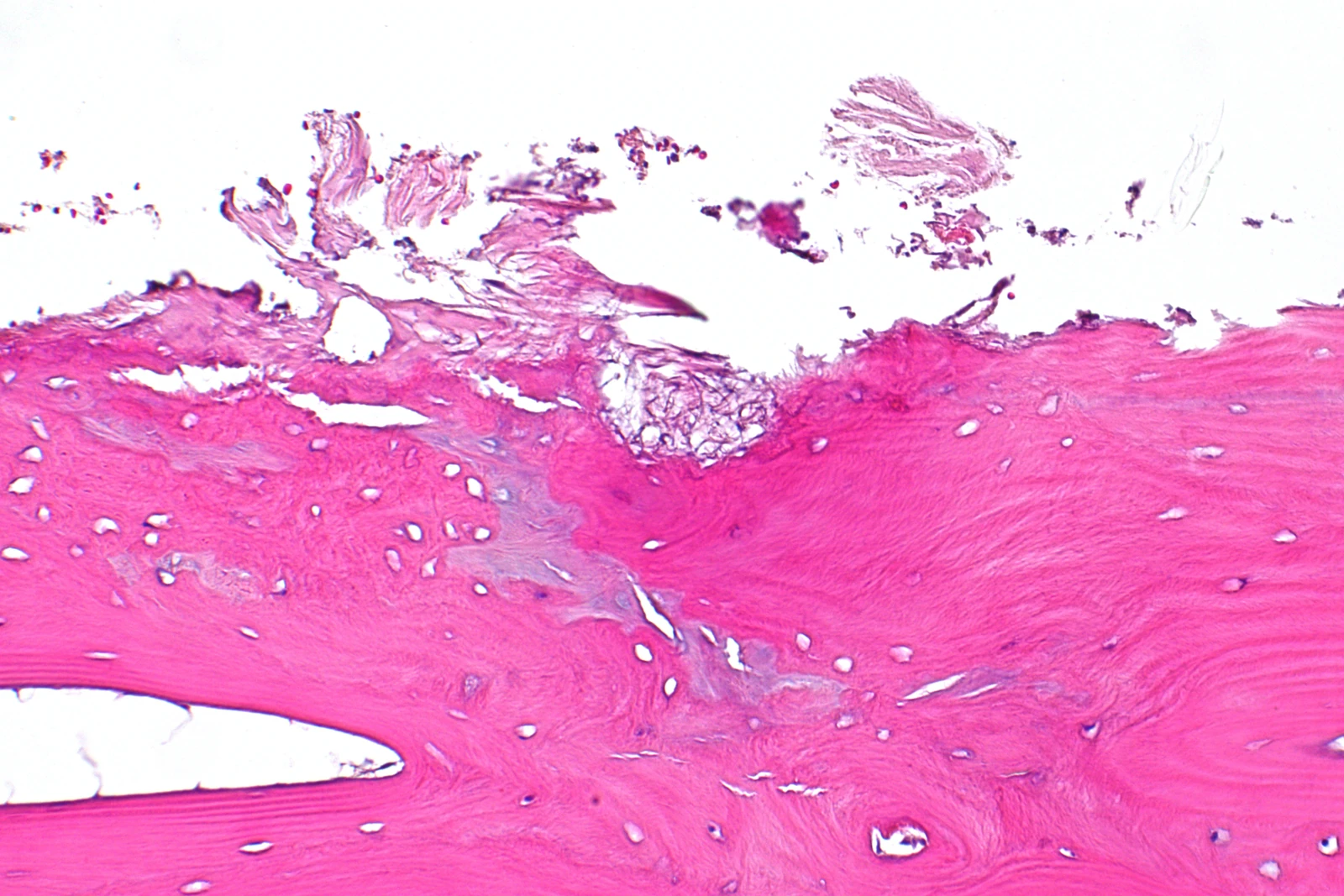
A Classification Built Around What the Tissue Does
A review led by Fudan University and affiliated hospital researchers examines how engineered skeletal models should be described and evaluated for drug research. Its five operational classes are osteogenic spheroids, bone-like microtissues, engineered skeletal constructs, bone organoids and high-fidelity bone organoids. The classification is intended to make the evidence behind a model name explicit.
The classes are not a universal quality ranking. A scaffold-guided construct can answer a useful pharmacological question even when its architecture is supplied largely by the material. A more self-organized model may be preferable for investigating tissue development or remodeling. The choice depends on which biological property the experiment needs to preserve and measure.
The authors use a structured narrative search covering literature through July 2026. Their synthesis is a representative evidence map rather than an exhaustive systematic review or pooled estimate of model performance. It combines classification criteria, examples of multilineage interactions, biofabrication methods and proposed translational tests.
Mineral Deposition Is One Part of Bone Identity
Under the proposed criteria, a bone organoid should exhibit cell-generated bone-like architecture, an endogenous collagenous osteoid matrix, active biological mineralization and at least one dynamic skeletal function. A high-fidelity designation adds stronger evidence of hierarchical matrix organization, coordinated formation and resorption, and controlled mechanosensitivity or mechanics attributable to the tissue.
Calcium staining or a stiff construct can be misleading when a scaffold already contains mineral or phosphate. The review therefore emphasizes acellular controls, uninduced cultures and longitudinal measurements that distinguish inherited material properties from newly formed tissue. Scaffold-free assembly alone also provides insufficient evidence of organoid identity if the resulting aggregate lacks matrix organization and function.
Vascular, neural and immune components can be important for specific uses, including delivery, inflammatory disease or tissue maintenance. The authors do not make every component a mandatory condition for all bone organoids. Instead, the model should contain the compartments needed for the claimed function, with their origin and contribution demonstrated.
Why Cell and Scaffold Origins Change the Interpretation
Representative examples show how the criteria alter model descriptions. Human bone-marrow stromal-cell systems can produce woven bone-like tissue yet lack demonstrated osteoclast-driven resorption or mechanosensitivity. Such evidence supports particular formation-related uses without establishing the full set of high-fidelity functions.
A cited remodeling model combines murine osteoblasts and mononuclear cells with demineralized bovine bone paper. It provides a way to study formation–resorption behavior, but it inherits tissue architecture from an animal-derived scaffold. The review treats this as an engineered skeletal construct. Describing the cellular species and scaffold separately makes the experimental basis of the result clearer.
These distinctions are relevant across tumor, metabolic and joint-related skeletal disease research. A model of matrix formation may suit an osteogenic intervention; a model of resorption needs an appropriate osteoclast compartment. Osteochondral questions require attention to the relationship between cartilage and bone, while tumor assays need evidence that the cultured malignant population and its response are retained.
Drug Research Requires a Model-Specific Benchmark
The review surveys pharmacological examples across skeletal applications. In bone and soft-tissue tumors, patient-derived models have been used to examine drug sensitivity in heterogeneous sarcoma populations. The cited literature includes a collection of 44 sarcoma organoid lines spanning eight subtypes, SHH-pathway inhibition with vismodegib in chondrosarcoma models, and MCL1 inhibition in CIC::DUX4-associated disease models. These are examples of distinct experimental questions and populations.
For osteoporosis-related screening, formation and resorption need to be measured together if the intervention is intended to modify remodeling. In inherited skeletal disease, patient-derived induced pluripotent stem cells and isogenic correction can help connect a genotype with a functional phenotype. The review discusses such approaches in jawbone and osteogenesis-imperfecta modeling, where a corrected comparator can strengthen causal interpretation.
The authors propose positive and negative reference compounds, concentration–response measurements, batch-variation estimates and clinically or preclinically informed response ranking. Assay-separation statistics, such as the Z′ factor, are useful when the assay and its controls support that calculation. These are validation recommendations; the review does not establish that every model class has already met them.
Fabrication Precision and Biological Maturation Need Separate Evidence
Printing and microfabrication can control the initial geometry, cell placement and material composition of a construct. Biological maturation unfolds afterward. The review argues for following matrix deposition, mineral organization, regional viability and skeletal function over time rather than treating a precise day-zero shape as evidence of mature bone.
Lineage composition, donor background, passage number and culture matrix can all change the measured response. Mechanical results also need controls that separate scaffold stiffness from tissue-generated properties. A compound that changes cell number, mineral staining or construct stiffness may affect different processes, so those endpoints should be interpreted alongside viability and direct matrix measurements.
The evidence remains uneven across formation, resorption, vascularization and mechanosensitivity. No single model in the review supplies every desired property for every application. Its practical proposal is to connect a stated skeletal function with the experiment that demonstrates it, then test whether that function gives reproducible information about the intervention under study.