PBPK-Informed Machine Learning for Gastric-pH Drug Interactions
Train an exposure-ratio predictor on virtual weak bases generated with PBPK simulations, then compare predictions with separate clinical interaction observations.
Intestinal SafetyComputational Models
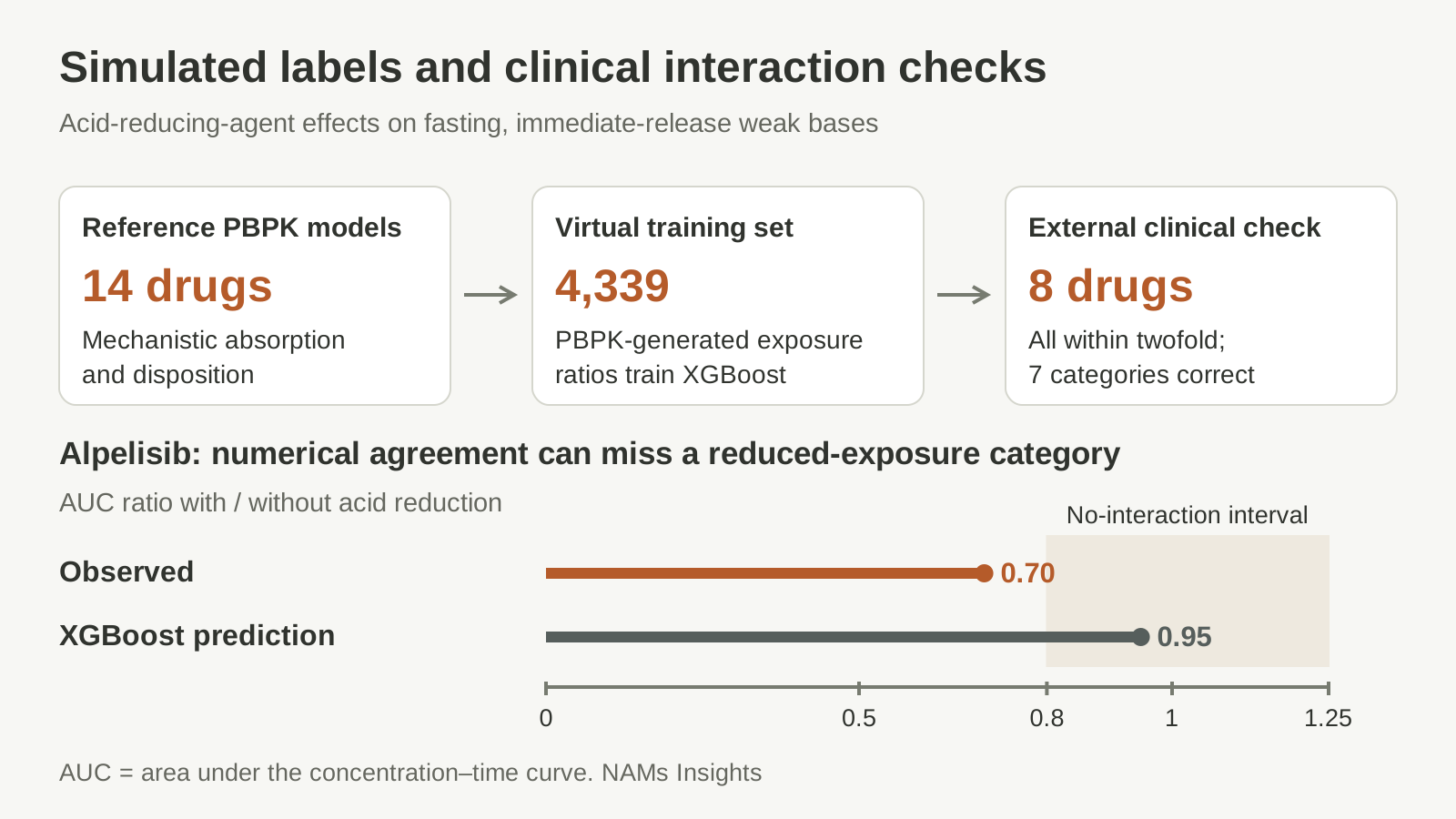
PBPK-generated training and a separate clinical test answer different questions; alpelisib illustrates a missed interaction category. (NAMs Insights)
Research Applications
Prioritize fasting, immediate-release compounds for detailed acid-reducing-agent interaction assessment.
Model & Design
GastroPlus 9.8.2 physiological absorption/disposition models for 14 reference weak bases; 4,339 retained virtual compounds; eight additional clinical drug comparisons.
Experimental Format
Simulated baseline gastric pH 1.3 versus elevated-pH conditions; XGBoost decision-tree boosting predicts the interaction ratio of area under the concentration–time curve (AUC); 80:20 development/test split and fivefold tuning.
Model Components
Component
Reference and simulated data
Description
Literature-derived drug parameters and observed PK/interaction studies; 5,000 generated virtual compounds reduced to 4,339 after excluding AUC ratios below 0.10.
Component
Independent clinical comparison
Description
Observed AUC interaction ratios for eight further drugs; separate mechanistic PBPK estimates retained as a comparator.
Measurements & Endpoints
Interaction AUC ratio
Numerical prediction error
Interaction category at the 0.80–1.25 interval
Feature-attribution patterns
Analysis
Distinguish agreement with PBPK-generated labels from agreement with clinical observations. Evaluate continuous ratios and binary interaction categories separately.
Published Evidence
Study Design
Develop on simulated compounds, then compare eight further drug-level clinical observations with XGBoost and PBPK estimates.
Simulated labels for internal testing; observed clinical ratios and separately calculated PBPK predictions externally.
Finding
Simulated test R² 0.98 and mean absolute percentage error 2.64%. All eight clinical predictions were within twofold; seven of eight interaction categories were correct. Alpelisib was observed at 0.70 but predicted at 0.95.
A machine-learning model learned exposure changes generated by mechanistic simulations, then correctly classified seven of eight clinical interaction comparisons. Its missed alpelisib result illustrates why a twofold prediction window and a correct interaction category are different tests.