Bladder Cancer Organoid Chemotherapy and ADC Response Assay
Measure concentration-dependent drug response in bladder cancer organoids and compare a chemotherapy subset with postoperative follow-up.
Tumor ModelsOrganoids
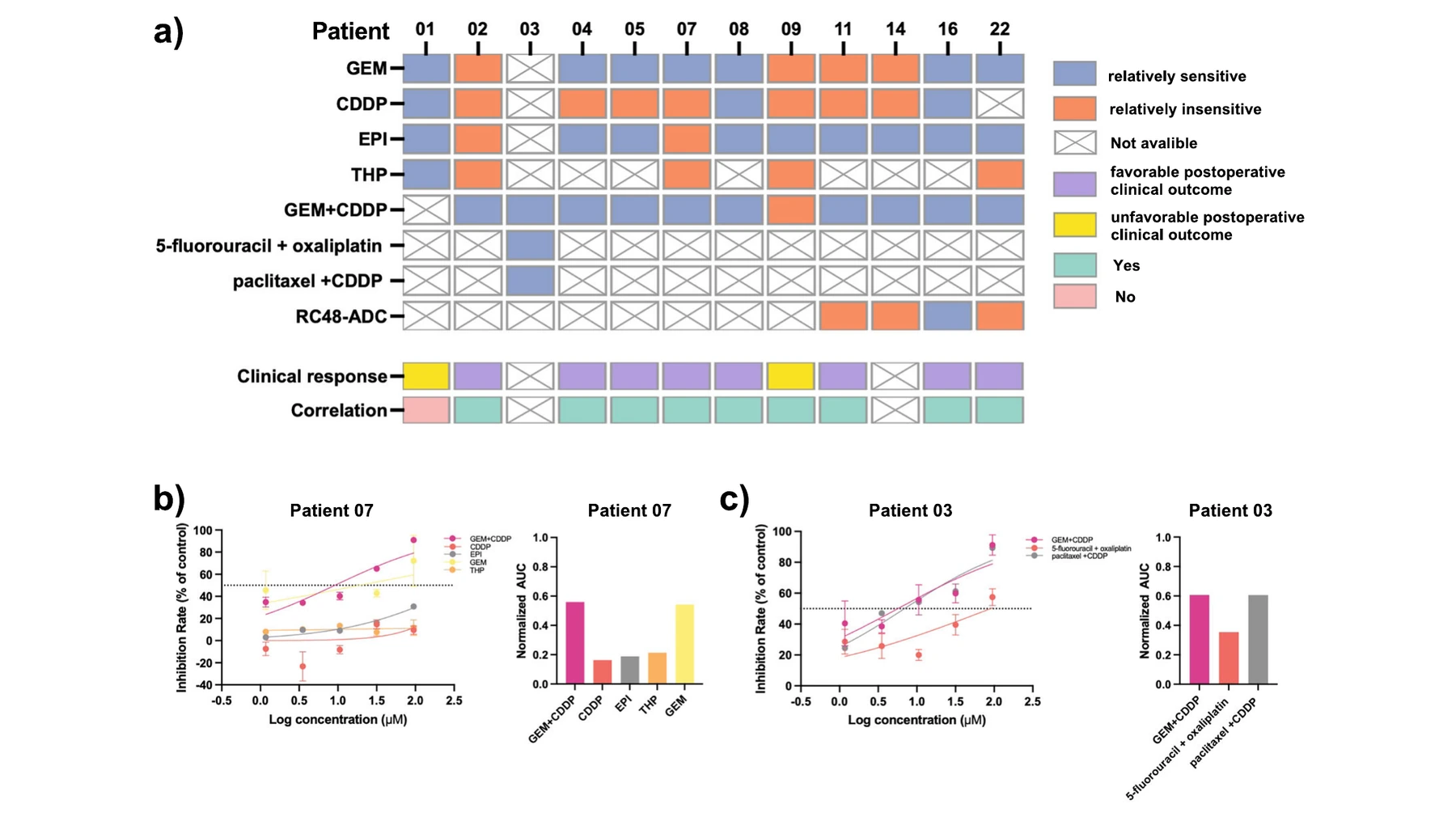
Organoid drug-response classifications and postoperative outcomes, with concentration-response examples from two patients. (Sijia Li et al., CC BY 4.0)
Research Applications
Compare patient-derived tumor responses across chemotherapy regimens and disitamab vedotin.
Model & Design
Bladder tumor organoids generated from resected tissue; 19 cultures established and 12 completed drug testing among 22 enrolled patients.
Experimental Format
ATP-associated viability after 72 hours, with IC50, curve area and maximum inhibition derived from concentration responses.
Model Components
Component
Patient material
Description
Surgical bladder cancer tissue and matched tumor histology.
Component
Treatment panel
Description
Gemcitabine, cisplatin, epirubicin, pirarubicin, combinations and RC48/disitamab vedotin.
Component
Response measurement
Description
CellTiter-Glo 3D viability, with selected proliferation and apoptosis measurements.
Measurements & Endpoints
ATP-associated viability and concentration-response metrics
Assay completion and sample-to-result interval
Agreement with postoperative clinical course
Analysis
Keep the number tested for each drug separate and distinguish postoperative chemotherapy concordance from the organoid-only ADC experiments.
Published Evidence
Study Design
Exploratory drug classification with a small postoperative comparison.
A small bladder cancer study completed drug testing for 12 of 22 patients. Chemotherapy comparisons were linked with postoperative follow-up, while disitamab vedotin was evaluated only in organoids.