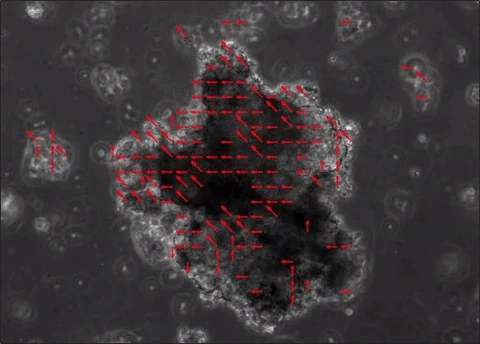
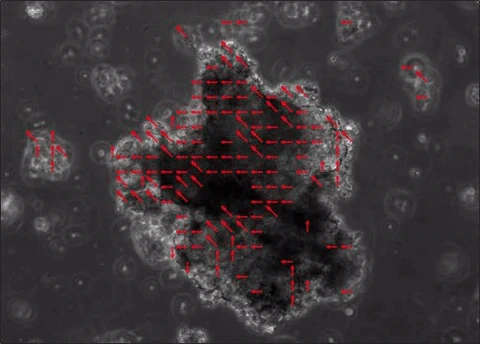
Investigation of early cardiac morphogenesis, cardiotoxicity and stage-dependent developmental effects.
Model & Design
Human pluripotent-stem-cell-derived chamber-like cardiac organoids with myocardial and early endocardial-like components; predominantly early/atrial-like identity.
Experimental Format
Low-attachment culture with brightfield chamber/video analysis, calcium imaging and cellular/molecular injury measurements.
Model Components
Component
Human cardiac tissues
Description
H9 stem-cell-based organoids; formation was also assessed with H1 and urinary-derived iPSCs.
Interpret morphology and function separately; developmental experiments preserve the distinction between early exposure and exposure after chamber formation.
Published Evidence
Study Design
Benchmark isoproterenol and anthracycline responses; compare thalidomide/acitretin exposure stages with reference conditions.
Study Sample
Formation assessment: N = 8 independent experiments and more than 600 organoids. Each drug endpoint has its own sampling.
Comparison
Untreated/vehicle conditions, β-blocker control, aspirin reference and alternative developmental windows.
Finding
Isoproterenol increased beating; doxorubicin/daunorubicin reduced chamber area. Thalidomide effects depended on exposure stage, with no significant chamber/beating change in the reported later window.
Interpretation & Limits
Formation efficiency is not a universal toxicity-prediction metric.
The tissues retain early developmental and atrial-like features.
Doxorubicin functional/injury assays and daunorubicin morphology observations are separate comparisons.
Human stem-cell-derived cardiac organoids formed stable chamber-like structures and registered changes in beating, chamber area and cell injury. Drug comparisons also showed that developmental exposure timing altered the measured response.