Five-Drug Comparison in Gastric Organoids with Signet-Ring Components
Compare chemotherapy responses in gastric organoids with and without signet-ring cell carcinoma components.
Tumor ModelsOrganoids
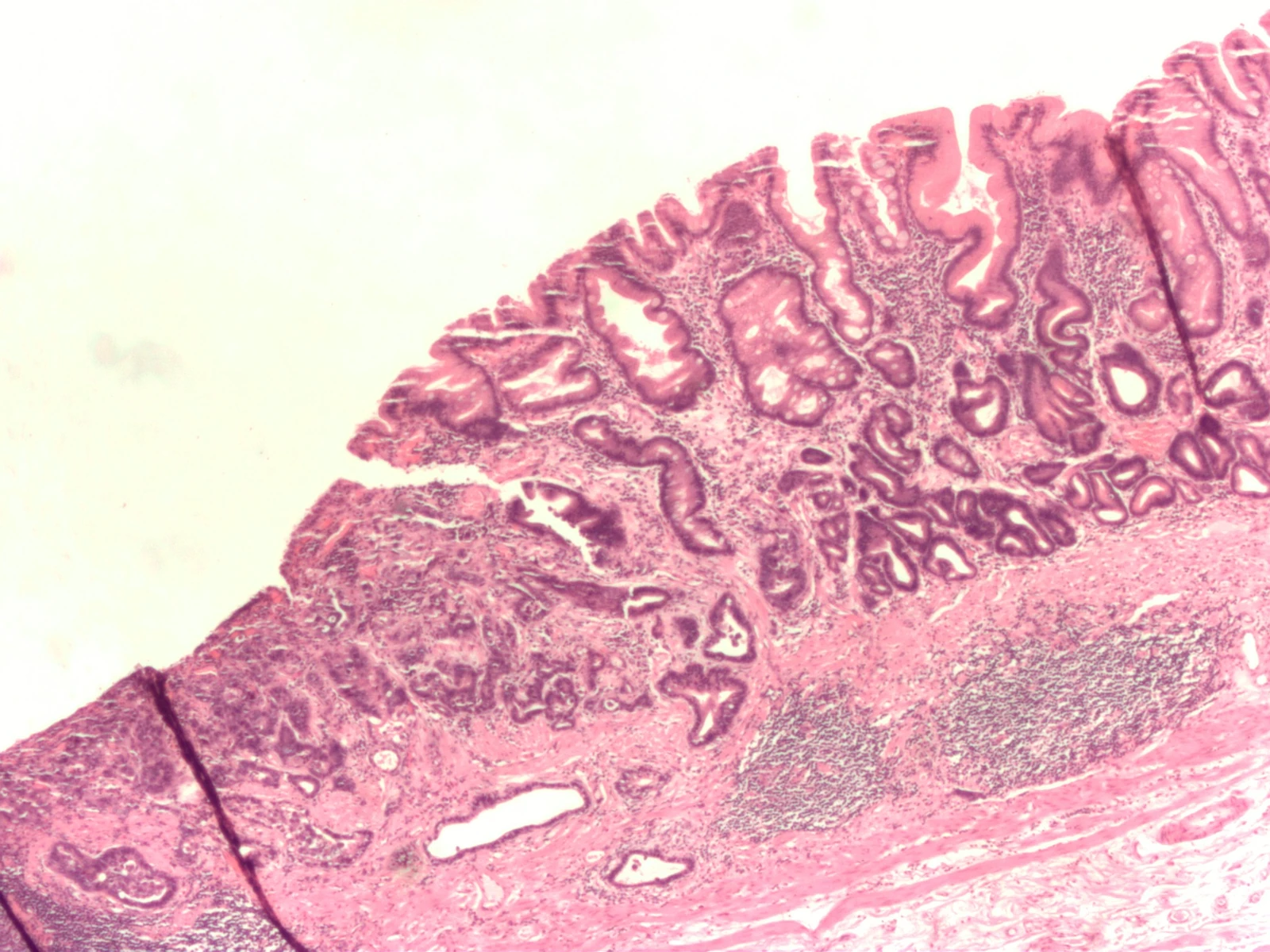
Gastric adenocarcinoma with adjacent mucosa, H&E stain. (Nephron, CC BY-SA 3.0)
Research Applications
Subtype-associated pharmacology and exploratory matching to clinical chemotherapy outcomes.
Model & Design
17 gastric cancer organoid cultures were established from 27 tissue samples: 5 with 20–60% signet-ring components and 12 without. Drug comparisons used 13 models, comprising 4 with signet-ring components and 9 without.
Experimental Format
Four-day organoid growth followed by 4–6 days of drug exposure and MTS measurement. Five single agents were compared.
Model Components
Component
Drugs
Description
5-fluorouracil, oxaliplatin, SN38, paclitaxel and epirubicin; 0.1% DMSO vehicle.
Component
Model characterization
Description
Histology and whole-exome mutation/copy-number comparisons with parental tumors.
Measurements & Endpoints
MTS viability and inhibition rate
Dose-response curves
Subtype comparison
Clinical disease-free/progression-free survival association
Analysis
Compare inhibition at the source-defined plasma-reference concentrations and full dose-response profiles, then examine associations with the clinical regimen received.
Published Evidence
Study Design
SRCC-component versus non-SRCC organoid comparison with a small observational clinical follow-up.
Study Sample
Drug-tested population: 13 models, 4 with signet-ring components and 9 without, from the 17 established cultures. The clinical heatmap contains 13 cases; Fig5A adjuvant survival groups are 6 sensitive and 4 resistant, while Fig5B stage IV groups are 1 and 2.
Comparison
Vehicle; five drug classes; non-SRCC models; matched clinical outcomes.
Finding
Models with signet-ring components were less sensitive to 5-fluorouracil and oxaliplatin than the other models (P = 0.011 and 0.003). Between-subtype differences for SN38, paclitaxel and epirubicin were not significant.
Interpretation & Limits
The clinical performance estimates lack a clear evaluable denominator, alongside separately reported clinical-analysis groups.
The small observational clinical association does not validate treatment selection.
Epithelial culture lacks the full immune/stromal environment and may select subpopulations.
Thirteen drug-tested gastric cancer organoids revealed subtype-associated chemotherapy differences. Four models with signet-ring components were less sensitive to fluorouracil and oxaliplatin than nine non-signet-ring models; differences for three other drugs did not reach significance.