
Gastric Organoids with Signet-Ring Components Show Lower Fluorouracil and Oxaliplatin Sensitivity
Thirteen drug-tested gastric cancer organoids revealed subtype-associated chemotherapy differences. Four models with signet-ring components were less sensitive to fluorouracil and oxaliplatin than nine non-signet-ring models; differences for three other drugs did not reach significance.
Comparing a Histological Feature Across Patient-Derived Models
Researchers at Qilu Hospital and Shandong University established gastric cancer organoids to examine whether signet-ring cell carcinoma components were associated with different drug responses. The PLOS ONE study compared five chemotherapeutic agents, checked model fidelity and related selected organoid results to subsequent clinical outcomes.
The team obtained 27 tissue samples and established 17 organoid cultures, a 63% success rate. Five models came from tumors containing signet-ring components, which accounted for 20–60% of the corresponding tumor specimens. The other 12 established cultures lacked signet-ring components.
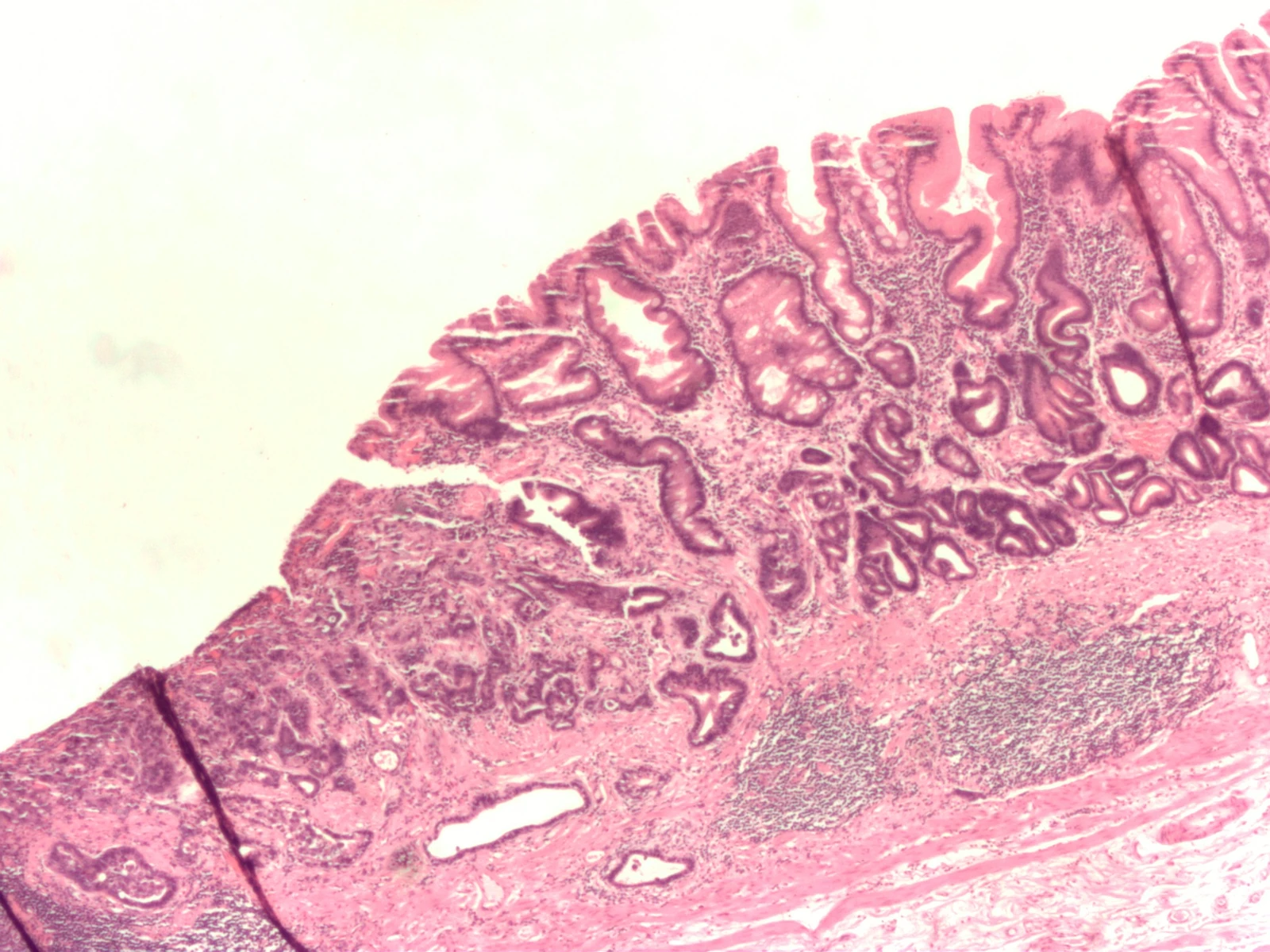
Histology and sequencing supported retention of important parental tumor characteristics. Most models showed no obvious morphology unique to the signet-ring group. Whole-exome comparisons retained many mutations and copy-number alterations, while differences in tumor mutational burden and microsatellite-instability measures were not statistically significant.
The Clearest Difference Involved Fluorouracil and Oxaliplatin
Drug comparisons used 13 organoid models: four with signet-ring components and nine without. Organoids grew for four days before drug treatment, followed by four to six days of exposure and an MTS viability assay. The five agents were 5-fluorouracil, oxaliplatin, SN38, paclitaxel and epirubicin. SN38 is the active metabolite of irinotecan. Responses were ranked using concentrations referenced to plasma exposure in the source, alongside dose-response curves; the cultures did not reproduce patients’ full pharmacokinetic profiles.
The signet-ring-component models were relatively resistant to 5-fluorouracil and oxaliplatin. Non-signet-ring models were significantly more sensitive to these agents, with P values of 0.011 and 0.003, respectively. Responses also varied among models within each group.
Paclitaxel produced the highest mean inhibition rate in both groups: 59.85% in signet-ring-component organoids and 59.97% in non-signet-ring organoids. Some models also responded to SN38 or epirubicin. Between-group differences for these three drugs were not significant. The comparisons between epirubicin and paclitaxel were also nonsignificant within each subtype, so the assay does not establish a decisive ranking between them.
Clinical Follow-Up Was Encouraging but Small
The paper presents drug profiles and clinical outcomes for 13 cases. Two patients did not receive postoperative therapy. For the postoperative adjuvant-therapy survival analysis, the figure identifies six patients with drug-sensitive organoids and four with resistant organoids. No recurrence was observed in the sensitive group during a median 21.0 months of follow-up, while two resistant-group patients experienced recurrence during a median 18.8 months. The disease-free-survival comparison had a P value of 0.044.
The stage IV comparison involved one sensitive and two resistant cases. These very small groups showed different progression-free-survival observations, but they cannot provide a stable estimate of predictive performance. Most clinical regimens combined S-1 with oxaliplatin, and selected cases also received immunotherapy, whereas the organoid experiments measured individual chemotherapy agents.
For clinical concordance, the authors report sensitivity of 85.7%, specificity of 100% and accuracy of 90.9%. The evaluable denominator used to calculate these estimates was not clearly specified. Alongside the different survival-analysis groups, that gap limits interpretation of predictive performance in this small cohort.
Culture Selection Limits the Subtype Comparison
The organoids provide a tractable way to compare epithelial tumor responses, but they omit much of the immune and stromal environment. Culture can also favor particular populations: three signet-ring-component cultures stopped proliferating as fibroblasts became associated with them. Both incomplete establishment and later growth failure affect which tumors reach drug testing.
The central result is the lower fluorouracil and oxaliplatin sensitivity observed in the signet-ring-component group. The clinical follow-up supports further evaluation of those model responses, while the small groups, variable treatment combinations and unresolved performance denominator constrain claims about selecting a regimen for an individual patient.