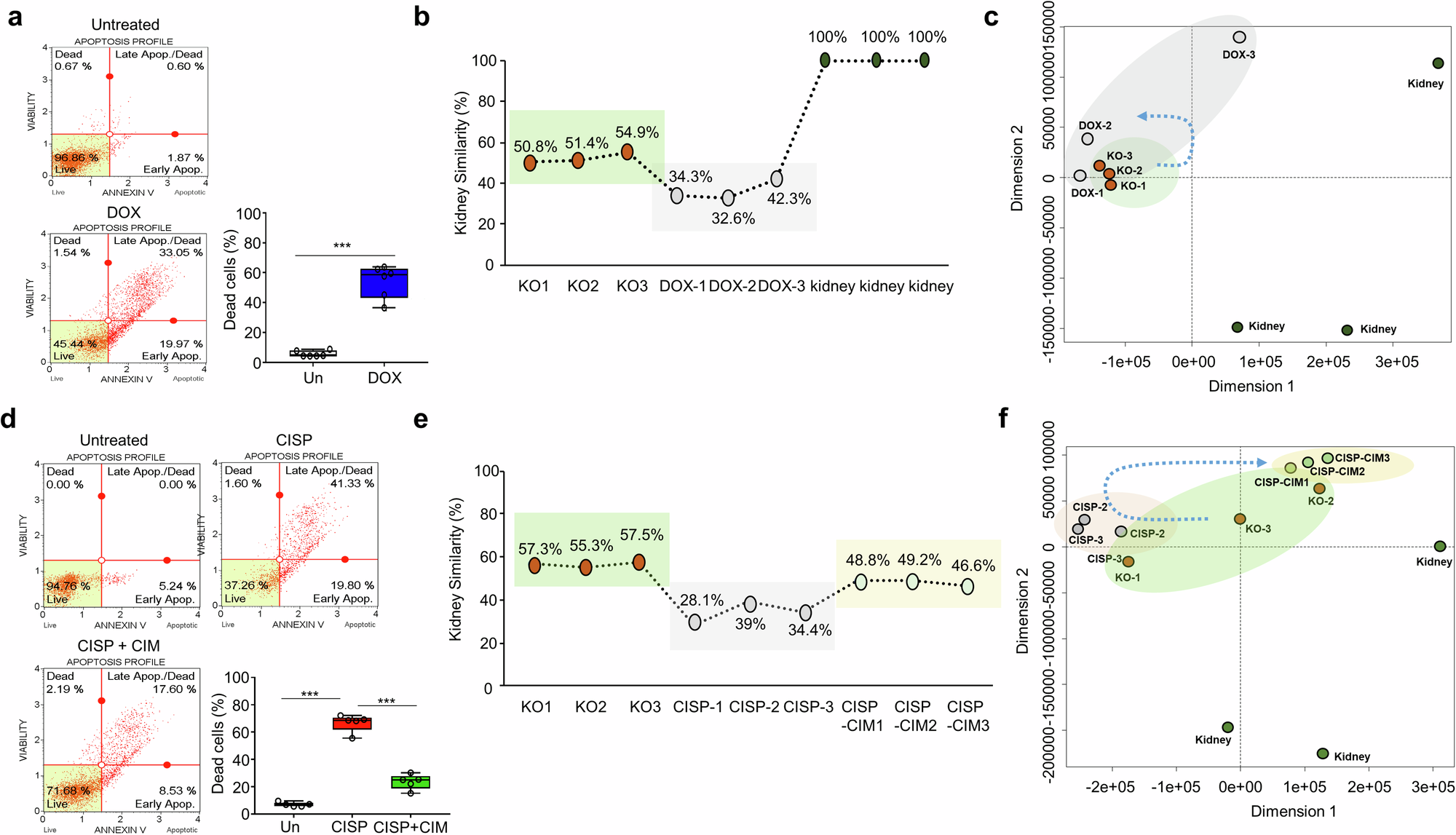
Quantitative characterization of kidney epithelial features alongside independent organoid injury measurements.
Model & Design
Adult-kidney-tissue-derived and human pluripotent-stem-cell-derived kidney organoids, referenced to normal kidney expression datasets.
Experimental Format
An 86-gene panel derived from GTEx data covering 21 organs and 7,361 samples; distance-based similarity scoring combined with experimental drug exposure.
Model Components
Component
Expression data
Description
Specified kidney and low-differentiation reference samples; organoid bulk RNA-sequencing.
Component
Phenotypic comparisons
Description
Tubular morphology, renal injury markers and annexin V measurements after selected drugs.
Measurements & Endpoints
Kidney similarity score
Differentiation-associated expression changes
Drug-associated score change
Apoptosis and renal injury markers
Analysis
Calculate similarity within the study-defined reference framework and examine whether score changes agree with tissue and cell-injury measurements.
Published Evidence
Study Design
Compare tissue references and organoids; evaluate captopril, doxorubicin, cisplatin and cisplatin–cimetidine responses.
Study Sample
External reference: 72 normal kidney samples. Drug experiments use study-specific organoid replicates rather than a broad clinical drug-validation cohort.
Comparison
Kidney tissue, undifferentiated or differentiated cultures, untreated organoids and matched drug groups.
Finding
External kidney tissue averaged above 98%; captopril preserved scores and viability under the tested conditions. Cisplatin and doxorubicin lowered scores, while cimetidine partly restored the cisplatin-associated change.
Interpretation & Limits
The score emphasizes epithelial identity; vascular and immune programs are excluded.
A percentage score depends on the reference and panel definition.
The tested drug set establishes selected response examples rather than all-mechanism prediction.
KiGEP uses a kidney-focused expression panel to compare organoids with reference tissue. The study combines developmental comparisons with selected drug exposures, including a non-injurious comparator and cisplatin–cimetidine co-treatment.