Autologous Lung Cancer Organoid–TIL Killing and Transcriptome Assay
Combine short-term autologous tumor killing with receptor-repertoire and single-cell analysis of lymphocyte states.
Tumor ModelsCo-cultures
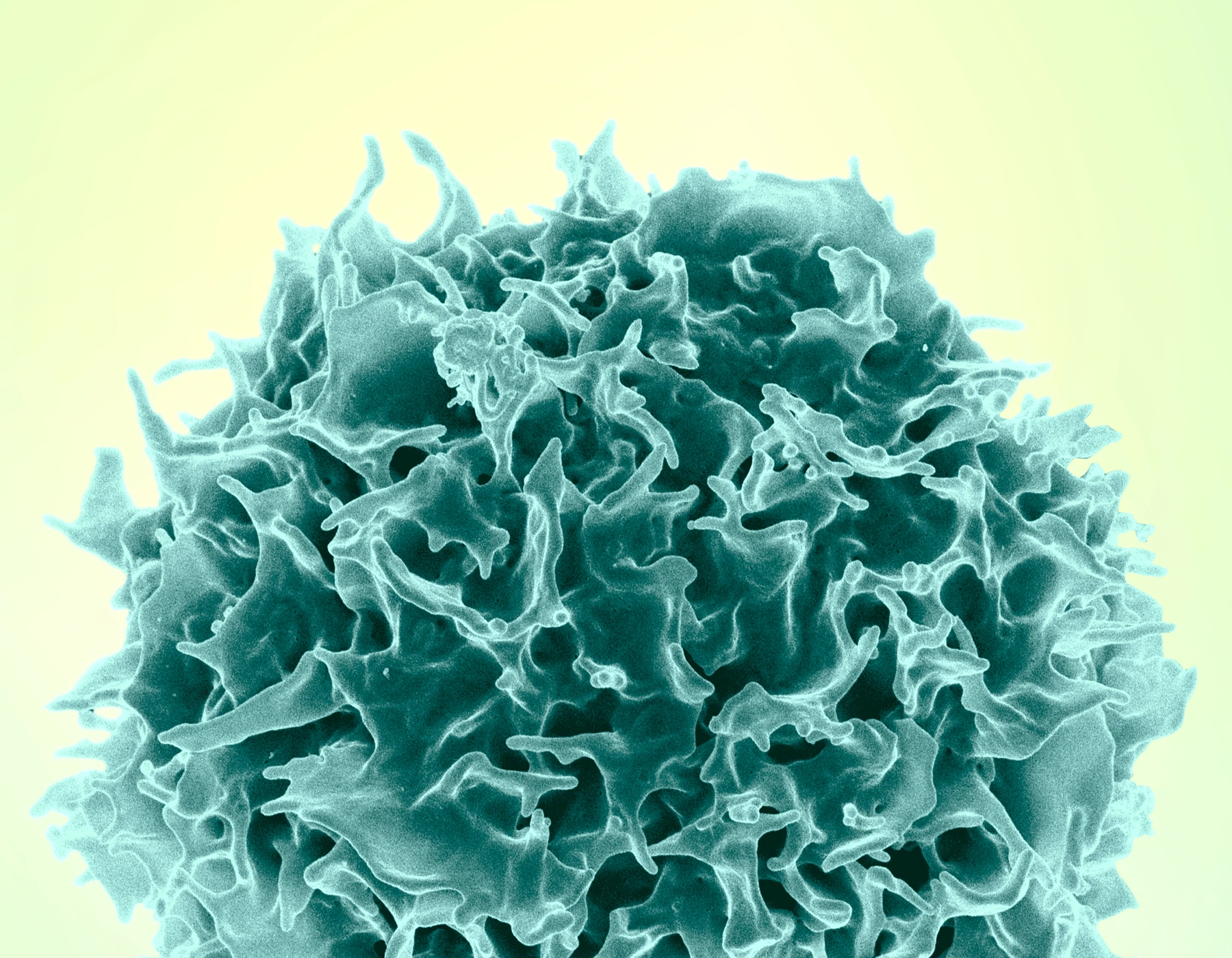
Colorized scanning electron micrograph of a healthy T lymphocyte. (NIAID, CC BY 2.0)
Research Applications
Functional comparison of expanded patient TILs against matched tumor and normal epithelial targets.
Model & Design
Twelve lung-cancer organoid cultures from eight adenocarcinoma and four squamous-cell carcinoma patients; distinct patient subsets used for repertoire, killing and single-cell experiments.
Experimental Format
Expanded autologous TILs at E:T 5:1 or 10:1 for 48 hours, with images every two to three hours and orthogonal injury/viability assays. Separate day-0/day-14 receptor analysis and five-donor single-cell profiling.
Model Components
Component
Functional readouts and controls
Description
CFSE/DAPI target-cell flow cytometry, caspase-3/7 imaging, LDH and cytokines; organoids alone, blood mononuclear cells, matched normal organoids and selected cross-patient targets.
Component
Immune profiling
Description
TCR clone diversity/overlap and single-cell transcriptomes. Cytotoxic and exhaustion-associated signals are assessed together; pathway enrichment is not a blocking experiment.
Measurements & Endpoints
Live target-cell fraction and LDH injury
Apoptosis-associated imaging
TCR diversity and clonal enrichment
T-cell cluster proportions and expression states
Analysis
Keep patient, technical-replicate and profiling denominators separate. Compare functional autologous selectivity and profile changes without inferring lineage transitions or pathway causality from cluster enrichment.
Published Evidence
Study Sample
TCR comparison two patients; representative killing includes three technical replicates and a separate two-replicate blood-cell control; single-cell analysis five independent patients.
Comparison
Target organoids alone, blood mononuclear cells, matched normal and other-patient organoids; before/after expansion or coculture as specified.
Finding
Selected autologous combinations showed target injury and greater LDH killing than normal or other-patient controls. GZMB increased but GZMH did not; exhaustion-associated transcripts also increased. Five-donor population comparisons used one-tailed paired tests.
Interpretation & Limits
High effector ratios and short coculture do not reproduce the full tumor environment.
TCR scores and TNF/IL-17 pathway enrichment do not prove clone-specific recognition or causal killing mechanisms.
Small distinct experimental subsets and absent clinical TIL outcomes limit prediction claims.
Study Design
Primary study comparisons of the stated models, treatments and measurements.
Patient-matched lung cancer organoids and tumor-infiltrating lymphocytes supported short-term killing assays and single-cell profiling. Cytotoxic changes appeared alongside exhaustion-associated signals, while pathway enrichment remained associative and clinical response prediction was untested.