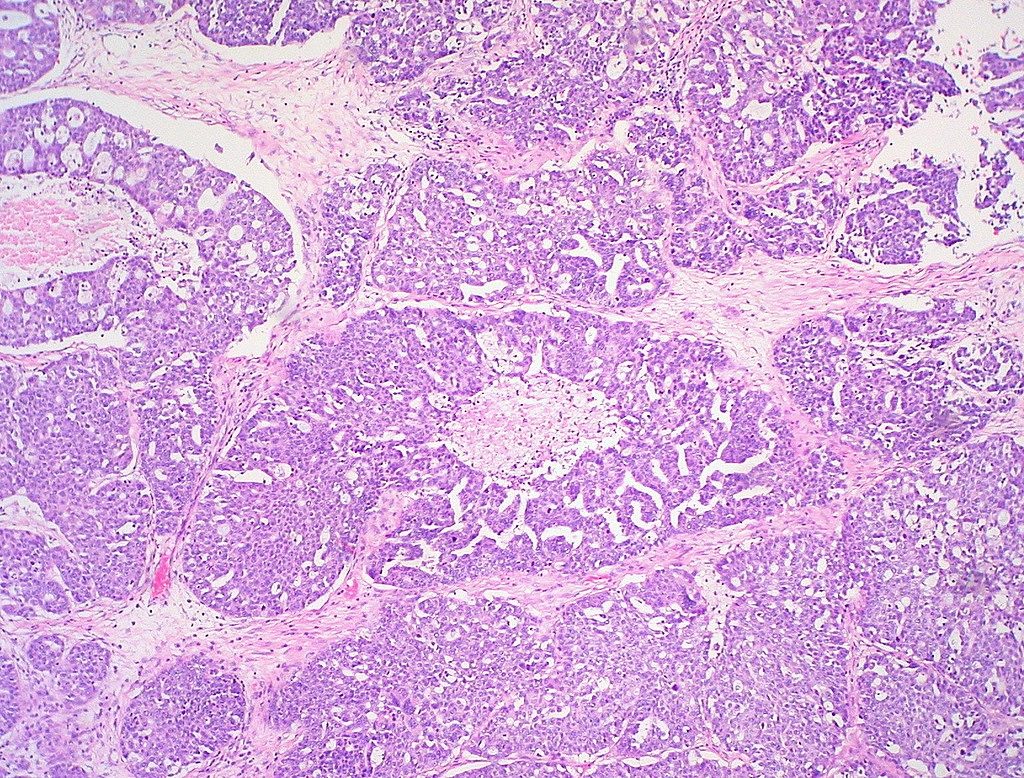
Explore functional drug sensitivity alongside histology/genomics in ovarian cancer.
Model & Design
21 organoid lines from 30 treatment-naive epithelial ovarian cancer specimens, with multiple successfully established histologies.
Experimental Format
384-well cultures; drug added 48 hours after seeding at six concentrations; six-day exposure followed by CellTiter-Glo 3D; technical triplicates.
Model Components
Component
Models
Description
Patient-derived epithelial ovarian cancer organoids in GFR Matrigel.
Component
Agents and endpoints
Description
Carboplatin, paclitaxel, olaparib, niraparib; vehicle/staurosporine controls; ATP viability, dose-response and IC50.
Measurements & Endpoints
Organoid viability/IC50
Histology and genomic concordance
Chemotherapy outcome agreement
Selected PARP-maintenance duration comparisons
Analysis
Thirty tumors yielded 21 cultures; chemotherapy response testing involved 20 treated patients with 12 evaluable outcomes, and PARP testing involved 10 cultures. Outcomes use the study’s evaluability and duration definitions.
Published Evidence
Study Design
Compare organoid sensitivity with first-line chemotherapy and selected PARP maintenance outcomes.
Study Sample
12 evaluable chemotherapy cases from 20 treated patients; 10 PARP-tested organoids; 21 successfully established cultures overall.
Comparison
Clinical response groups and genomic BRCA/HRD status; within-assay vehicle and positive controls.
Finding
Chemotherapy accuracy 91.67% (95% CI 61.52–99.79%); sensitivity 100% (95% CI 62.88–100%), specificity 66.67% (95% CI 12.53–98.23%). Selected PARP examples disagreed with genomic expectation but aligned with reported outcomes.
Interpretation & Limits
Eight no-residual-disease/nonrecurrent surgical cases excluded from chemotherapy comparison.
Small cohort and broad uncertainty intervals.
Culture establishment and histology selection bias.
Maintenance outcome does not isolate drug benefit from surgery/chemotherapy.
A single-center study established 21 organoid cultures from 30 untreated ovarian cancers. Chemotherapy comparisons used 12 evaluable cases; selected PARP-inhibitor examples showed agreement with outcomes despite discordance with genomic HRD status.