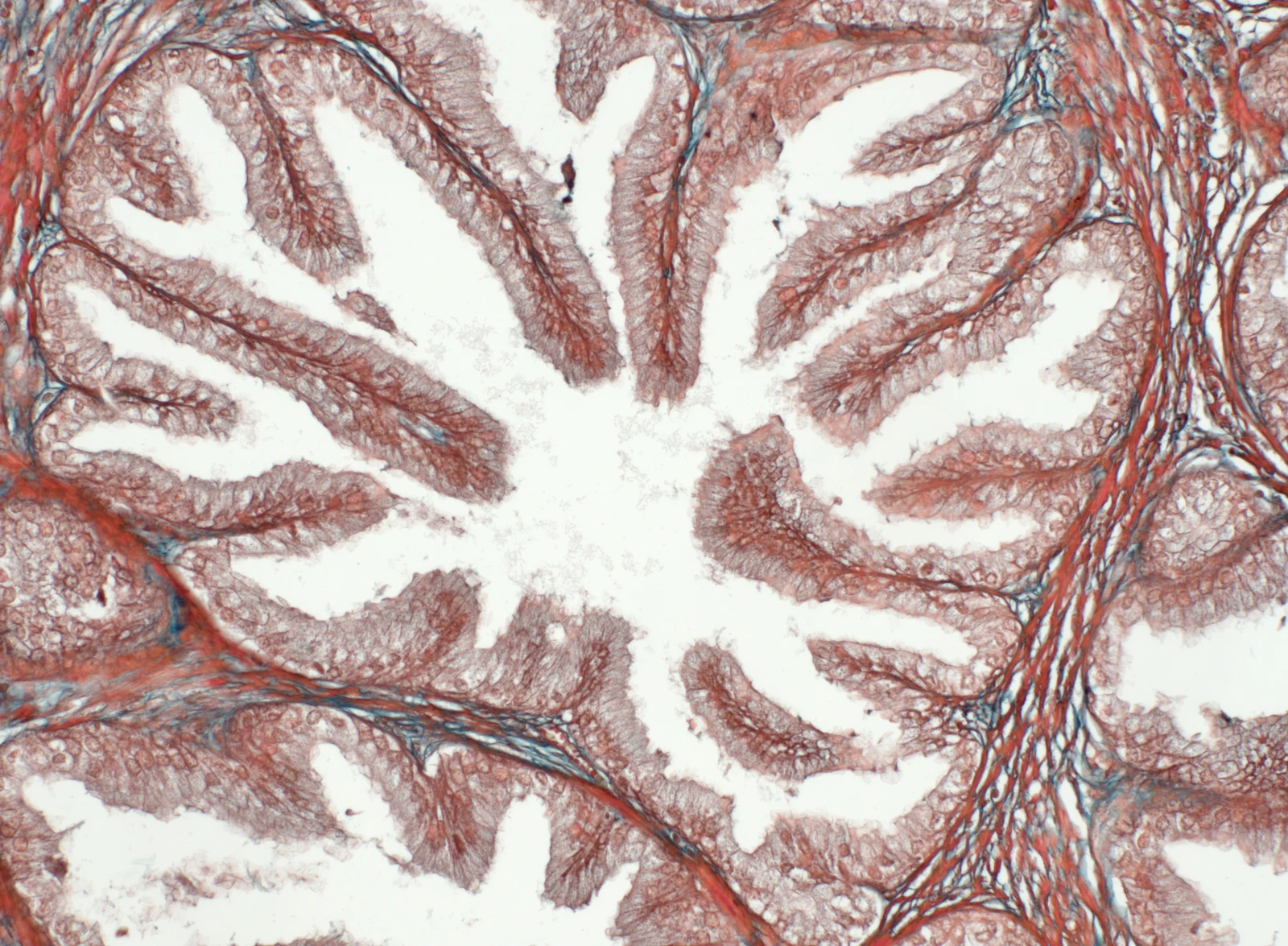
Investigate whether drug access contributes to differences between two-dimensional and organoid pharmacology.
Model & Design
Patient-derived prostate cancer organoids and two-dimensional cancer-cell cultures.
Experimental Format
Compare intact organoids with altered matrix and single-cell delivery conditions.
Model Components
Component
Patient-derived material
Description
Prostate cancer organoids characterized histologically and molecularly against their source tumors.
Component
Antisense drug
Description
OGX-427 (apatorsen), an HSP27-targeting antisense oligonucleotide.
Measurements & Endpoints
ASO uptake
HSP27 protein expression
Cell and organoid growth
Analysis
Follow delivery, target suppression and growth together when comparing 2D, intact 3D and altered-delivery conditions.
Published Evidence
Study Design
OGX-427 tested across 2D and 3D models with a matrix/delivery intervention.
Study Sample
A prostate cancer PDO collection and two-dimensional cultures.
Comparison
Two-dimensional cultures, intact matrix-associated organoids and adjusted delivery conditions.
Finding
The limited intact-organoid response increased after matrix removal and single-cell delivery, with improved uptake, target suppression and dose-dependent growth inhibition.
Interpretation & Limits
The reported greater-than-90% value describes initial organoid growth success.
Matrix removal and single-cell delivery alter the experimental configuration as well as access to the target.
An HSP27-targeting antisense drug suppressed its target in two-dimensional prostate cancer cultures but had limited activity in intact organoids. Changing matrix and delivery conditions improved uptake and restored dose-dependent growth inhibition.