
Drug Delivery Changes Antisense Responses in Prostate Cancer Organoids
An HSP27-targeting antisense drug suppressed its target in two-dimensional prostate cancer cultures but had limited activity in intact organoids. Changing matrix and delivery conditions improved uptake and restored dose-dependent growth inhibition.
Testing Apatorsen in Patient-Derived Models
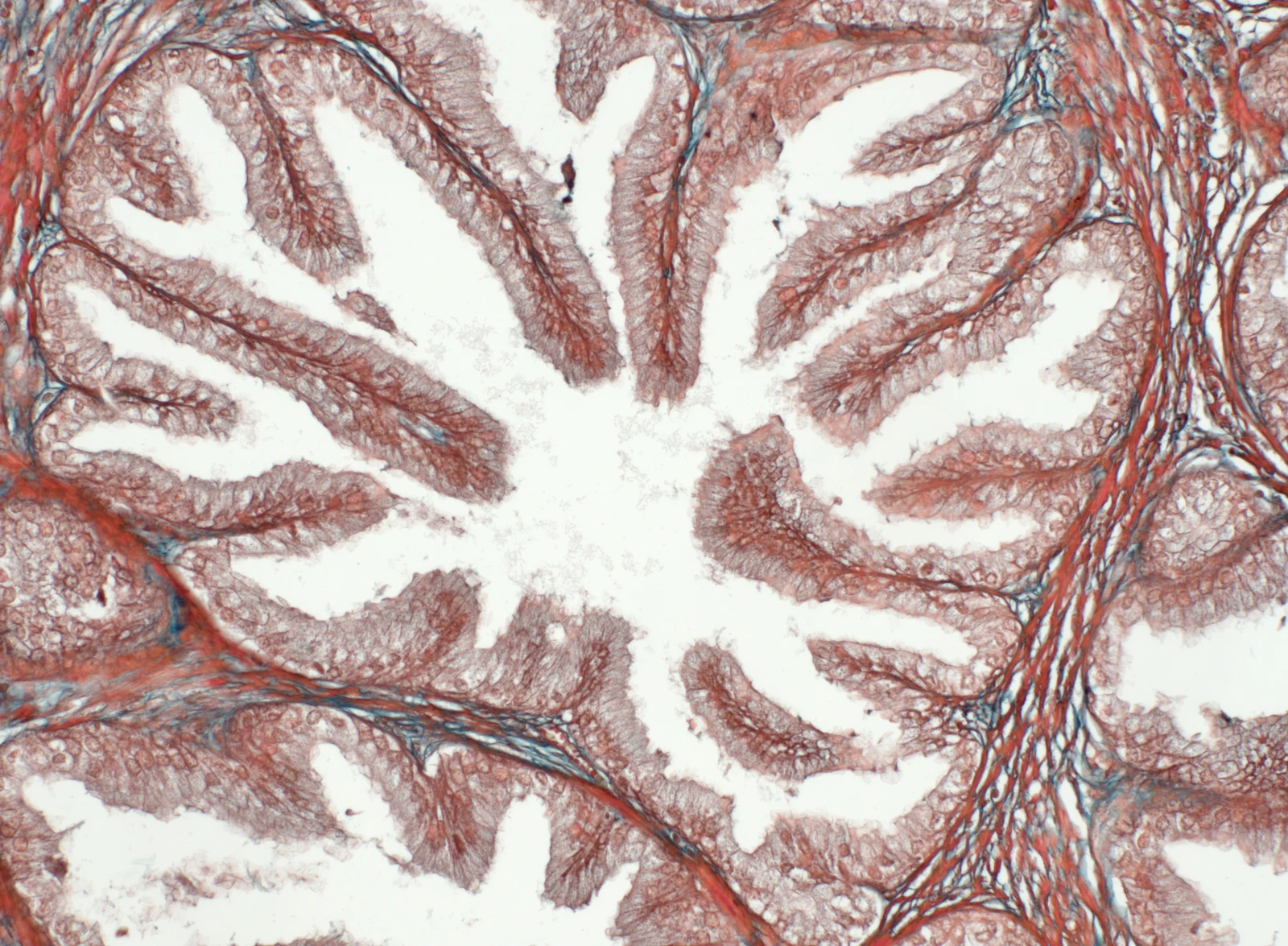
A French academic and hospital team established a prostate cancer organoid collection and compared its responses to antisense oligonucleotides with those of two-dimensional cultures. The initial organoid growth success rate exceeded 90%. Histological and molecular analyses examined whether the models retained features of the original tumors.
The study emphasized OGX-427, also called apatorsen, which targets heat shock protein 27 (HSP27). In two-dimensional cultures, the drug reduced HSP27 expression and inhibited cell growth. Its activity was much weaker in the intact three-dimensional organoids, despite the target-directed effect observed in the simpler cultures.
Changing Access to the Cells
Removing Matrigel and delivering the antisense drug to individual cells improved uptake. Under these altered conditions, HSP27 protein levels declined and organoid growth showed a dose-dependent inhibition. The comparison connected delivery, target modulation and growth within the same investigation.
The investigators identified extracellular matrix and organoid structure as likely barriers to drug access. Because changing delivery also changes the physical experimental setting, the results make those conditions part of the pharmacological comparison. For antisense development, this approach allows researchers to follow where an apparent loss of activity arises: access to cells, suppression of the target or the subsequent growth response.