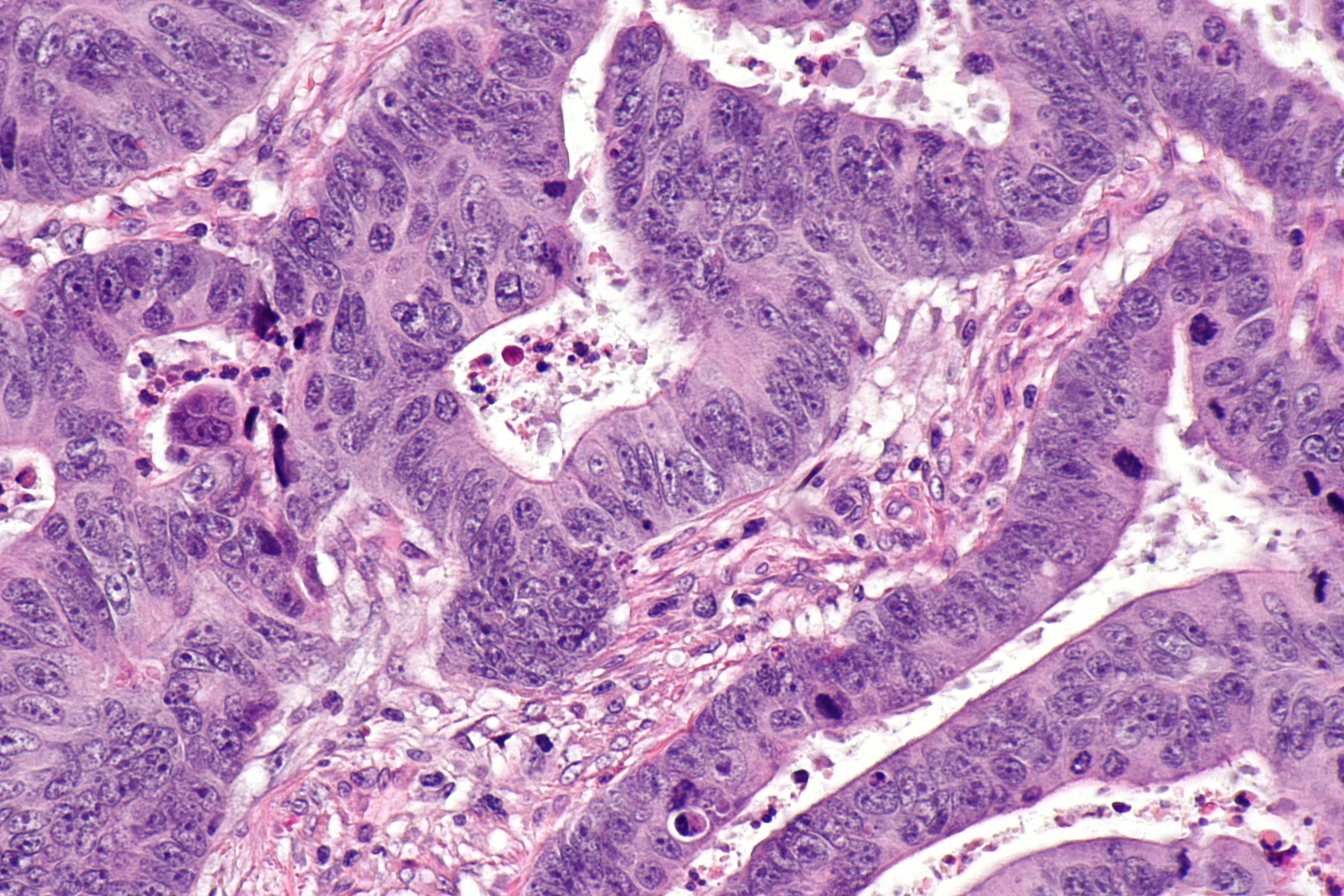
Resolve within-tumor drug-response variation and compare candidate combinations.
Model & Design
Single-cell-derived tumor organoids (STOs) and multicell-derived organoids (MTOs) from four colorectal cancer patients.
Experimental Format
PDMS chip with 3,618 microwells and an alginate–chitosan membrane, providing approximately 1,000 single-cell occupancies. STOs grew for 7 days and MTOs for 3 days before 72-hour drug treatment.
Model Components
Component
Model environment
Description
20% Matrigel supported STO formation. The membrane retained cells while permitting molecular exchange.
Component
Drugs and readouts
Description
Chemotherapy surrogate: 5-fluorouracil 40 μM, SN38 125 nM and oxaliplatin 5 μM. Initial 34-compound screen: candidates at 5 μM. Final selected-drug clearance comparison: candidates at 50 μM for three days. Separate concentration-response curves and combination indices complemented Calcein-AM/PI size/viability imaging.
Measurements & Endpoints
STO formation and size
Live/dead fluorescence-derived viability
Resistant-culture transcriptomics
Candidate IC50 and STO clearance
Combination index
Analysis
Compare individual STO response distributions with MTO responses. Use the oncoPredict R package (version 0.2), trained on cell-line pharmacogenomic resources, to nominate compounds, then retest them on the arrays.
Published Evidence
Study Design
Model characterization, chemotherapy-surrogate challenge and candidate combination testing.
Study Sample
Four patient sources. Screening and dose-response experiments were repeated twice.
Candidate drugs generally inhibited growth, but only a subset produced significant cytotoxicity. Selected combinations reduced the fraction of STOs with viability above 50%; the four patient-specific candidate combinations had combination indices below 1.
Interpretation & Limits
Single-cell culture selects surviving and self-renewing populations rather than representing every starting cell.
STO and MTO comparators had different pretreatment growth periods.
No prospective patient-outcome validation was performed.
A four-patient microfluidic study measured drug responses in individual single-cell-derived organoids. Transcriptome-selected compounds often slowed growth without strong killing; selected combinations improved clearance in the assay.