Transparent ITO Microelectrode Monitoring of Human Cardiomyocyte Drug Responses
Combine field-potential recording and microscopy on a transparent electrode surface to follow acute channel effects and longer cellular injury.
HeartElectrophysiology
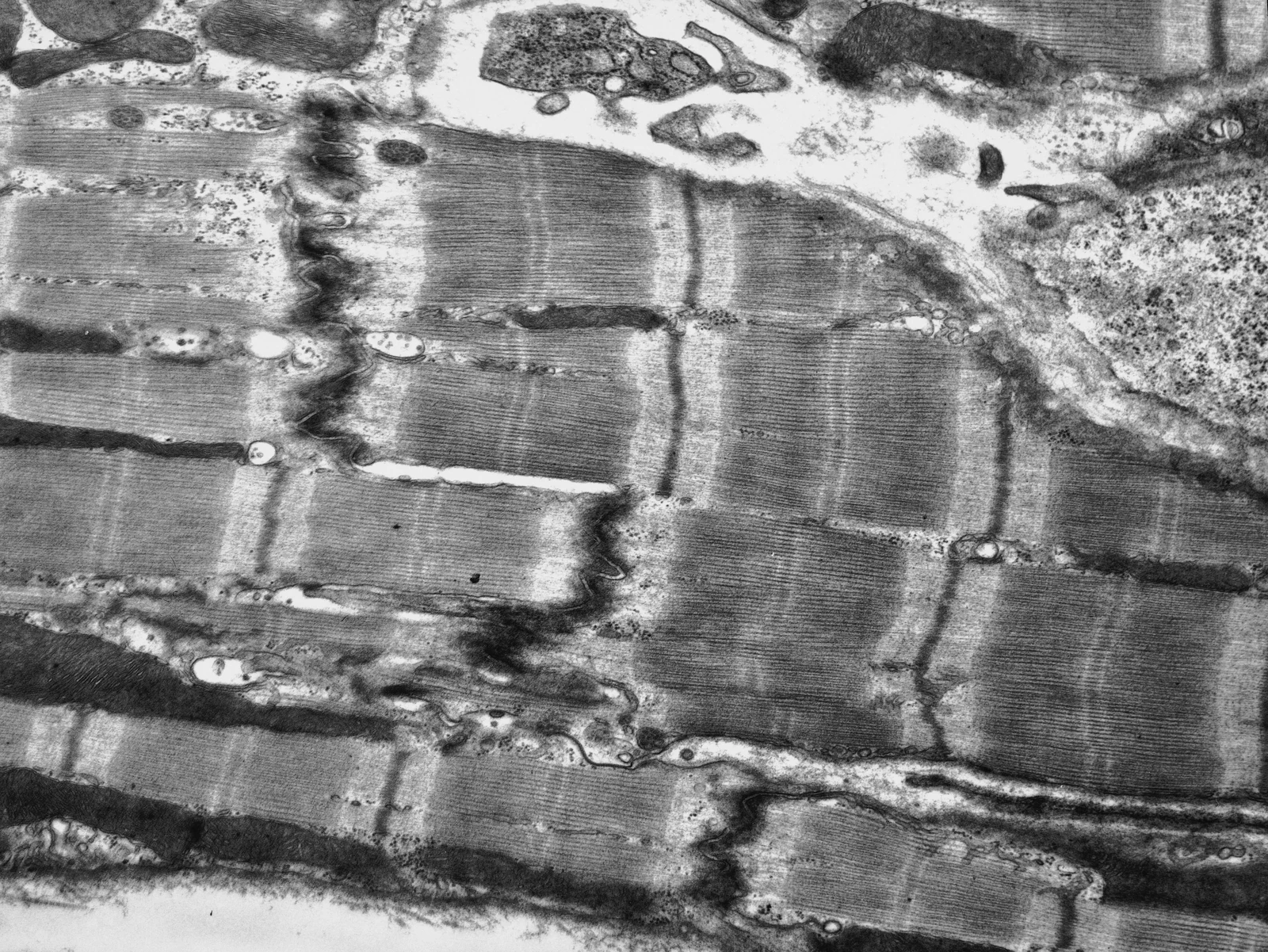
Transmission electron micrograph of cardiac muscle, showing sarcomeres and intercalated discs. (Prof Giorgio Gabella, CC BY 4.0)
Research Applications
Characterize electrical, viability and structural responses during preclinical cardiac-safety studies.
Model & Design
Day-30 cardiomyocytes from one human BJ fibroblast-derived induced pluripotent stem cell line; 97.06% cardiac-troponin-T positivity and predominantly ventricular-associated marker staining.
Experimental Format
CFPS-ITO-16W2E transparent 16-well/two-electrode-per-well array with CFPS-32 recording; calcium fluorescence, live/dead and α-actinin imaging.
Model Components
Component
Human cardiomyocytes
Description
Single BJ-derived line; fibronectin-coated ITO surfaces with five to six days of stabilization before recording.
Component
Drug comparisons
Description
Stepwise acute E-4031 at 0.003–0.03 μM and nifedipine at 0.008–0.8 μM; separate 3 μM doxorubicin exposure followed for two days; 0.1% DMSO controls.
Measurements & Endpoints
Beat period
Field-potential duration and Fridericia-corrected duration
Signal amplitude
Calcium transients
Cell viability and sarcomeric structure
Analysis
Compare acute concentration responses and separate day-zero/one/two doxorubicin recordings. Preserve raw and corrected duration when beat period changes markedly; reported error bars are SEM.
Published Evidence
Study Design
Opposing reference channel blockers and a separate sustained doxorubicin injury condition.
Study Sample
One stem-cell origin; baseline field-potential n = 12, calcium n = 3, drug electrophysiology n = 5; acute vehicle n = 4.
Comparison
Pre-exposure recording and corresponding vehicle/time controls.
Finding
E-4031 prolonged corrected duration; nifedipine shortened it without significant amplitude change. Doxorubicin slowed beating and prolonged raw duration while corrected duration initially fell; viability and sarcomeric integrity deteriorated.
Interpretation & Limits
Three compounds and one cell-line origin were tested.
Cardiomyocytes remain immature and two-dimensional.
A beat-rate correction can change direction when beating slows sharply; it must be interpreted with the original duration.
No large external drug-classification panel was evaluated.
A transparent microelectrode chip recorded drug-induced electrical changes while allowing imaging of the same human stem-cell-derived cardiomyocytes. Acute channel blockade altered electrical activity with little visible damage, whereas two-day doxorubicin exposure disrupted cell structure and viability.