Clear Cell Renal Cancer Organoid Culture Linked with UroCCR
Compare culture feasibility and tumor-marker preservation in patient-derived renal cancer organoids connected with clinical registry data.
Tumor ModelsOrganoids
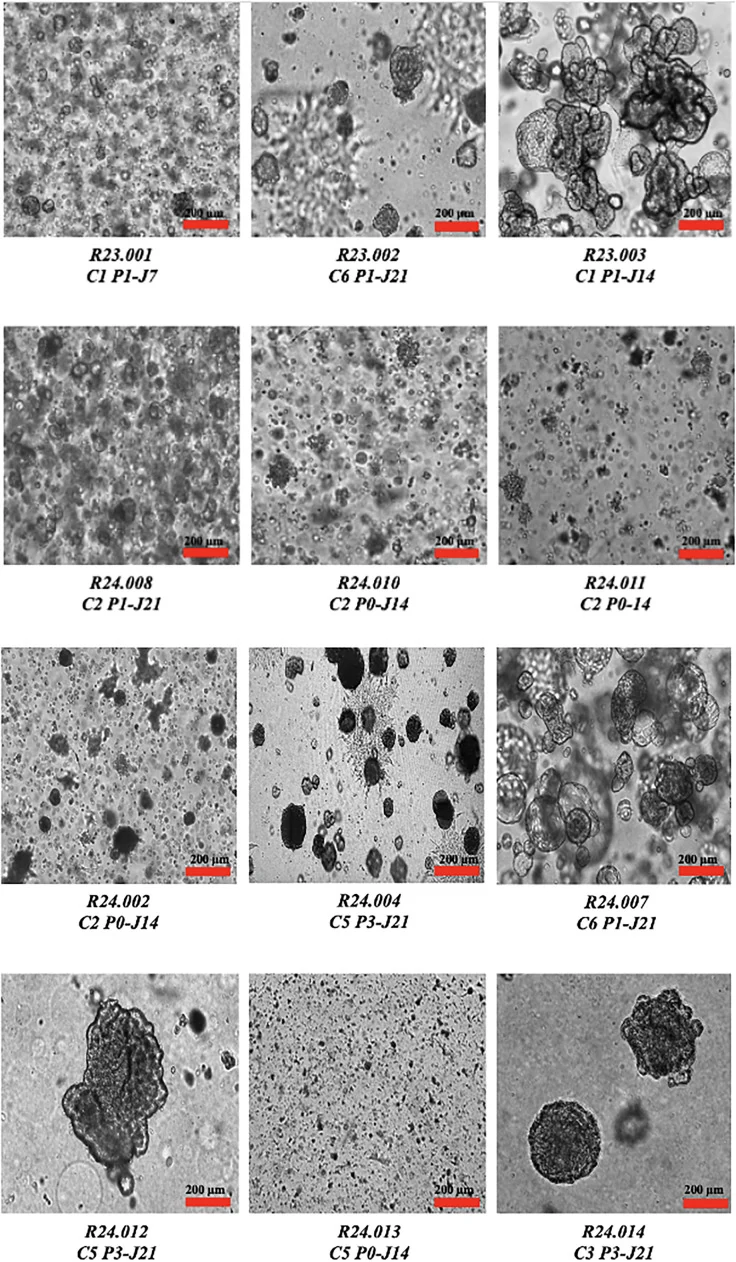
Phase-contrast images of renal tumor-derived cultures across patients and culture conditions. (R Lefranc et al., CC BY 4.0)
Research Applications
Develop and characterize a clinically linked preclinical tumor-model resource.
Model & Design
Twelve established renal tumor cultures from an 18-patient sampling study; five cultures received histological characterization.
Experimental Format
Seven culture conditions compared through persistence, passage history, microscopy and matched tissue analysis.
Model Components
Component
Source tissue
Description
Fresh or cryopreserved nephrectomy material with confirmed clear cell carcinoma for subsequent analyses.
Component
Culture formats
Description
Basement membrane matrices and a collagen-based air–liquid interface comparison.
Component
Characterization
Description
Matched histology and CA-IX/CK7 staining, linked with UroCCR clinical records.
Measurements & Endpoints
Culture establishment, duration and passages
Cystic/solid morphology
CA-IX and CK7 preservation
Analysis
Report enrollment, established cultures and histologically characterized cultures as separate stages; compare each culture with its matched source tumor.
Published Evidence
Study Design
Feasibility and matched histological characterization.
Study Sample
18 enrolled patients, 12 established cultures and 5 histologically characterized cultures.
Comparison
Seven culture conditions and corresponding primary tissue.
Finding
Median culture duration was 52 days; marker expression varied, including CK7 differences from primary tissue.
Interpretation & Limits
No drug-response/patient-outcome validation was performed.
Genomic and transcriptomic validation were not performed.
The immune and vascular compartments were not characterized for functional testing.
A Caen feasibility study compared seven culture conditions for clear cell renal cell carcinoma. The model collection was connected with a clinical registry, while tissue characterization revealed variable marker preservation.