Epidermal thickness and barrier-associated proteins
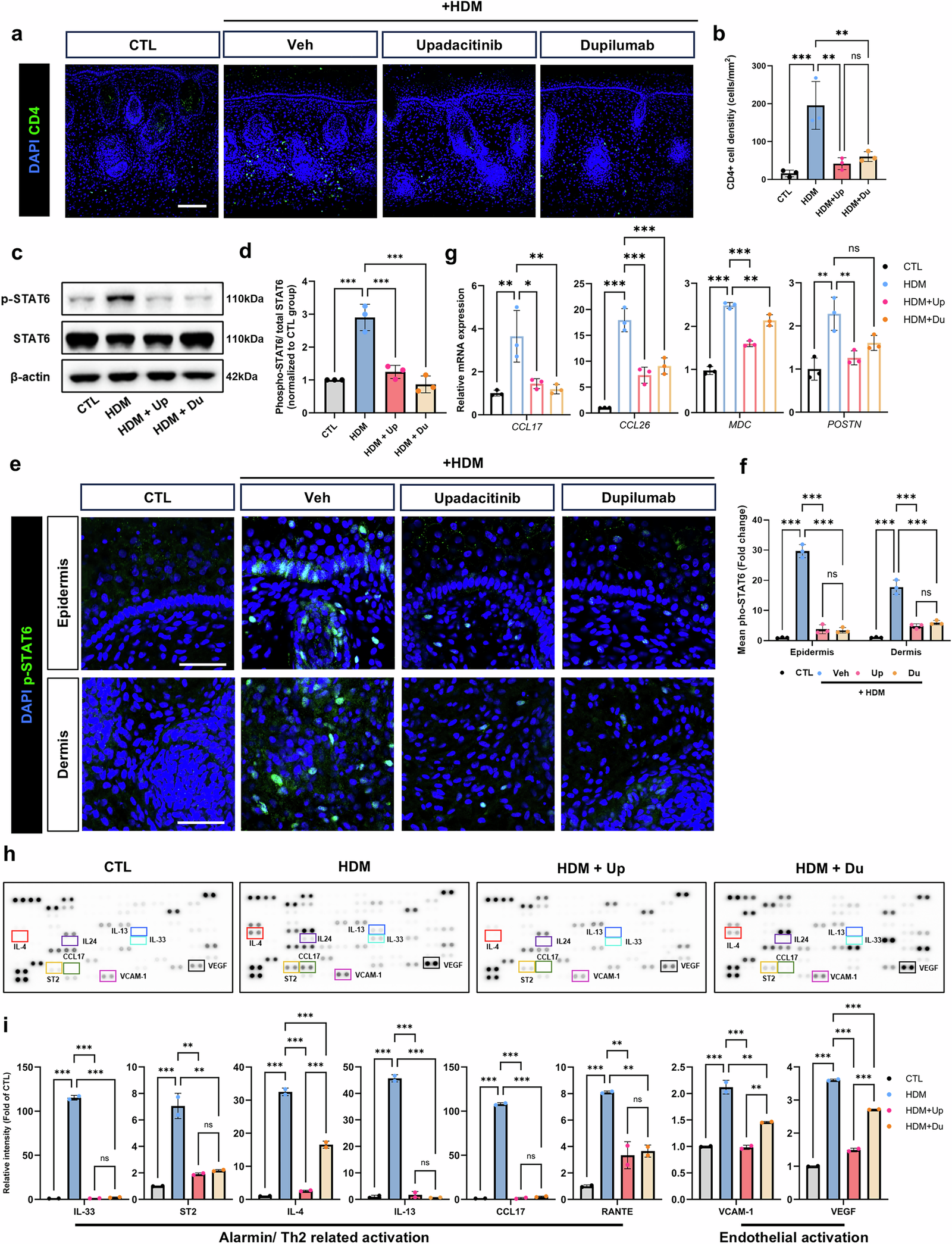
Upper-dermal immune-cell density
STAT6 phosphorylation/nuclear staining
Inflammatory genes and mediators
Analysis
Connect spatial tissue changes with pathway-associated measurements; keep immune-cell identity and the static vascular arrangement explicit.
Published Evidence
Study Design
Compare house-dust-mite-associated inflammation with the two mechanistically distinct therapies.
Study Sample
One described hiPSC background; cord-blood donors are incorporated independently. Selected drug figures report n = 3 comparisons, which are not presented as three patient disease backgrounds.
Comparison
Unstimulated controls, allergen/vehicle condition and each drug-treated condition.
Finding
Both therapies improved barrier-associated markers, reduced upper-dermal CD4 infiltration and decreased STAT6 phosphorylation and selected inflammatory signals.
Interpretation & Limits
Vascular-like networks are not a mature continuously perfused hierarchy.
Cord-blood cells do not reproduce the complete resident immune repertoire.
The model captures an acute allergen-associated state; chronic recurrence and individual clinical drug-response prediction were not evaluated.
Human skin and blood-vessel organoids were assembled with immune cells to study allergen-associated inflammation. Upadacitinib and dupilumab improved barrier-related markers and reduced STAT6-associated inflammatory signals.