
Human Neural Models Test an EPHX2 Target Prioritized for Alzheimer’s Disease
Patient-derived human neurons and cerebral organoids expressing the protective EPHX2 p.Arg287Gln variant had lower phosphorylated-tau measurements than wild-type models. The genetic target study also examined an EPHX2 inhibitor in mice and drug associations in health records.
Connecting Genetic Priorities to a Measured Neural Phenotype
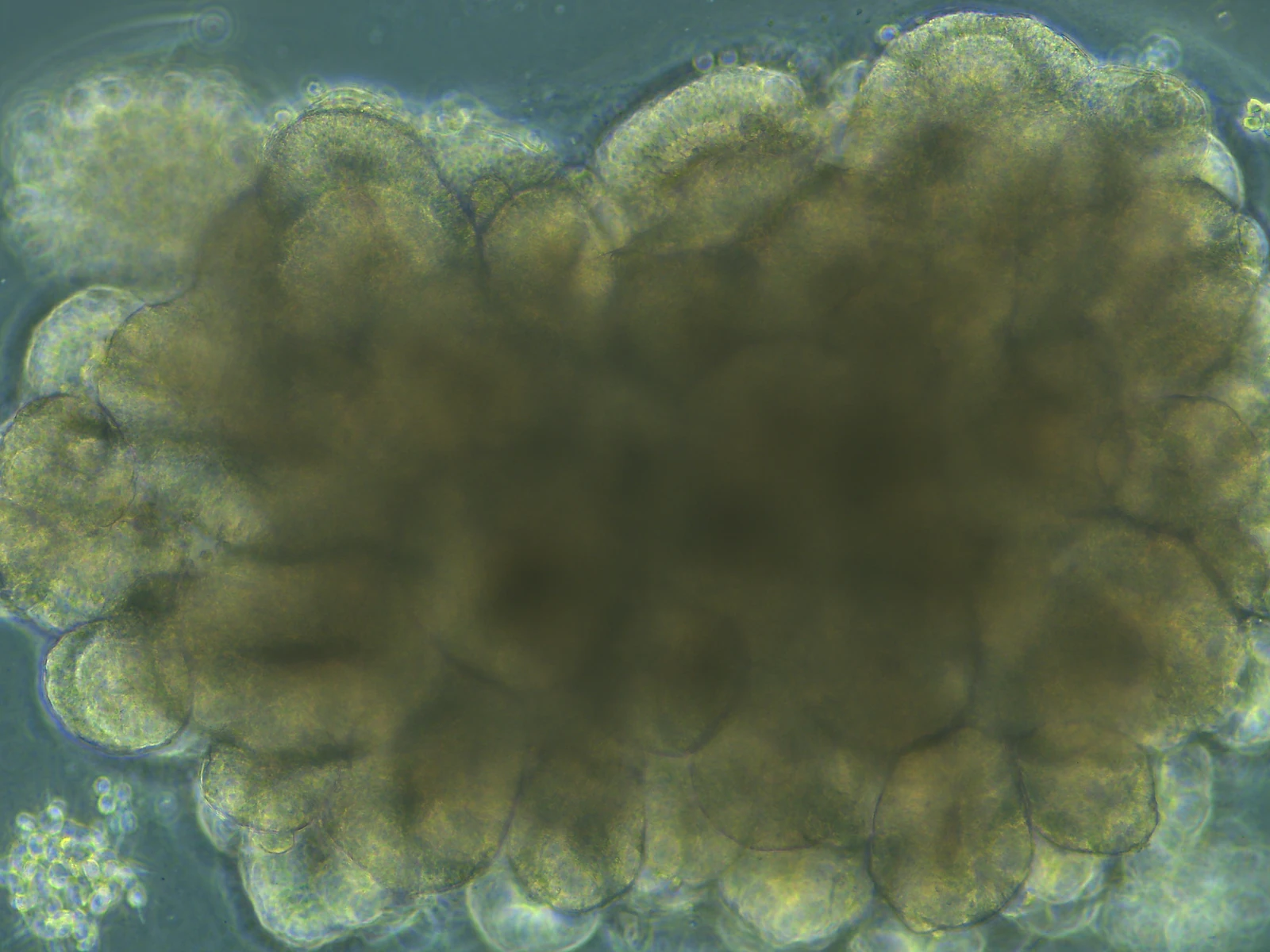
Researchers led by Cleveland Clinic combined human genetics, neural models derived from patient-specific induced pluripotent stem cells (iPSCs) and electronic health data to identify targets for Alzheimer’s disease (AD). The human-cell experiments focused on epoxide hydrolase 2, encoded by EPHX2, and a protective missense variant, p.Arg287Gln. Neurons and cerebral organoids carrying the variant had lower phosphorylated-tau measurements than corresponding wild-type EPHX2 models.
The design connected three different questions: which targets are supported by genetic association, whether changing a prioritized target alters a disease-related cellular phenotype, and whether existing drug exposure is associated with later AD incidence. A separate 5xFAD mouse experiment tested an EPHX2 inhibitor. These components provide complementary information for drug discovery, with each retaining its own experimental population and outcome.
A Target Screen That Keeps Ancestry and Statistical Criteria Visible
The computational analysis considered 1,229 druggable proteins, using brain protein and gene-expression quantitative trait loci together with AD genome-wide association studies. Mendelian randomization (MR) estimated the relationship between genetically predicted target abundance and disease risk. The investigators combined results into an Alzheimer’s MR score, or alzMR score, and checked candidates using additional genetic analyses, including colocalization and fine-mapping.
The study prioritized 19 targets for individuals of European ancestry. These spanned amyloid-related pathways, neurotransmission, inflammation, metabolism and vascular biology. EPHX2 was among the strongest candidates for inhibition. Seven targets in the African-ancestry analysis were described as suggestive: five candidates for inhibition and two for activation. The latter selection used nominal P < 0.05 across multiple analyses, a different evidential threshold from the false-discovery-rate criteria used in the European-ancestry analysis.
Genetic mapping around the CLU region helped distinguish neighboring regulatory effects. CRISPR interference at one regulatory variant lowered both CLU and EPHX2 expression in healthy iPSC-derived neurons; interference at a second variant lowered EPHX2 without changing CLU. Neither perturbation changed PTK2B expression in the reported comparison. This functional separation helped refine the target assignment within a genetically complex region.
Testing EPHX2 in Patient-Derived Neurons and Organoids
The neuronal work used an induced pluripotent stem cell line from one patient with late-onset AD. An inducible system expressed either wild-type EPHX2 or p.Arg287Gln. After neuronal differentiation and induction, the variant reduced pTau-181 relative to wild-type expression, with P = 0.003. The cerebral-organoid comparison also showed reduced phosphorylated tau, with P = 0.044, across 14 wild-type and 16 mutant organoids.
Prime editing supplied another test in the patient-derived background. Changing the EPHX2 variant from the G/G to A/A genotype reduced EPHX2 protein abundance. Transcriptomic comparisons implicated neuronal differentiation, survival and anti-inflammatory programs, including PI3K–Akt signaling. These pathway changes offer a mechanistic interpretation of the cellular phenotype; they do not establish that every implicated pathway mediates the tau response.
The authors also examined cerebrospinal-fluid biomarker genetics. The protective variant was nominally associated with lower phosphorylated tau among people with abnormal amyloid measurements, whereas the association was absent in the normal-amyloid group (P = 0.69). The tau association therefore depended on amyloid status in that dataset.
Drug Experiments and Health Records Add Different Tests
In 5xFAD mice, the EPHX2 inhibitor EC5026 reduced amyloid burden and microglia-associated inflammation and improved selected memory outcomes. The experiment began with 12 mice per treatment group, including both sexes, but the final number analyzed differed by assay. Pharmacokinetic and metabolite measurements supported brain exposure and target engagement. The cognitive and drug-treatment findings therefore belong to the mouse component; the human neural component tested genetic perturbations.
The health-record analysis evaluated 210 commonly prescribed drugs in 111,680 people with mild cognitive impairment. Four exposure models identified 12 drugs associated with lower subsequent AD incidence. For trazodone, the reported association was HR 0.86 (95% CI 0.80–0.91); an independent comparison with escitalopram gave HR 0.78. Methotrexate was associated with lower AD risk in the African-ancestry analysis but not in the European-ancestry analysis.
The authors note overlap among genetic cohorts, differences between ancestry datasets and uncertainty in claims-based diagnoses, which were rarely confirmed with imaging or cerebrospinal-fluid biomarkers. Drug-use associations can also retain confounding after adjustment. The authors propose further EPHX2 drug studies and ancestry-aware target development, supported by biomarker-confirmed cohorts and patient-stratification analyses.