
A Blood–Brain Barrier Consensus Model Separates Confident Calls from Inconclusive Predictions
A curated chemical dataset supported a consensus blood–brain barrier classifier with balanced accuracy of 0.81 on a scaffold-based test. Predicting continuous brain-to-blood concentration ratios was harder, and a dopamine-receptor screening application left 1,080 of 6,031 compounds inconclusive.
Curation Changes the Dataset Before Modeling Begins
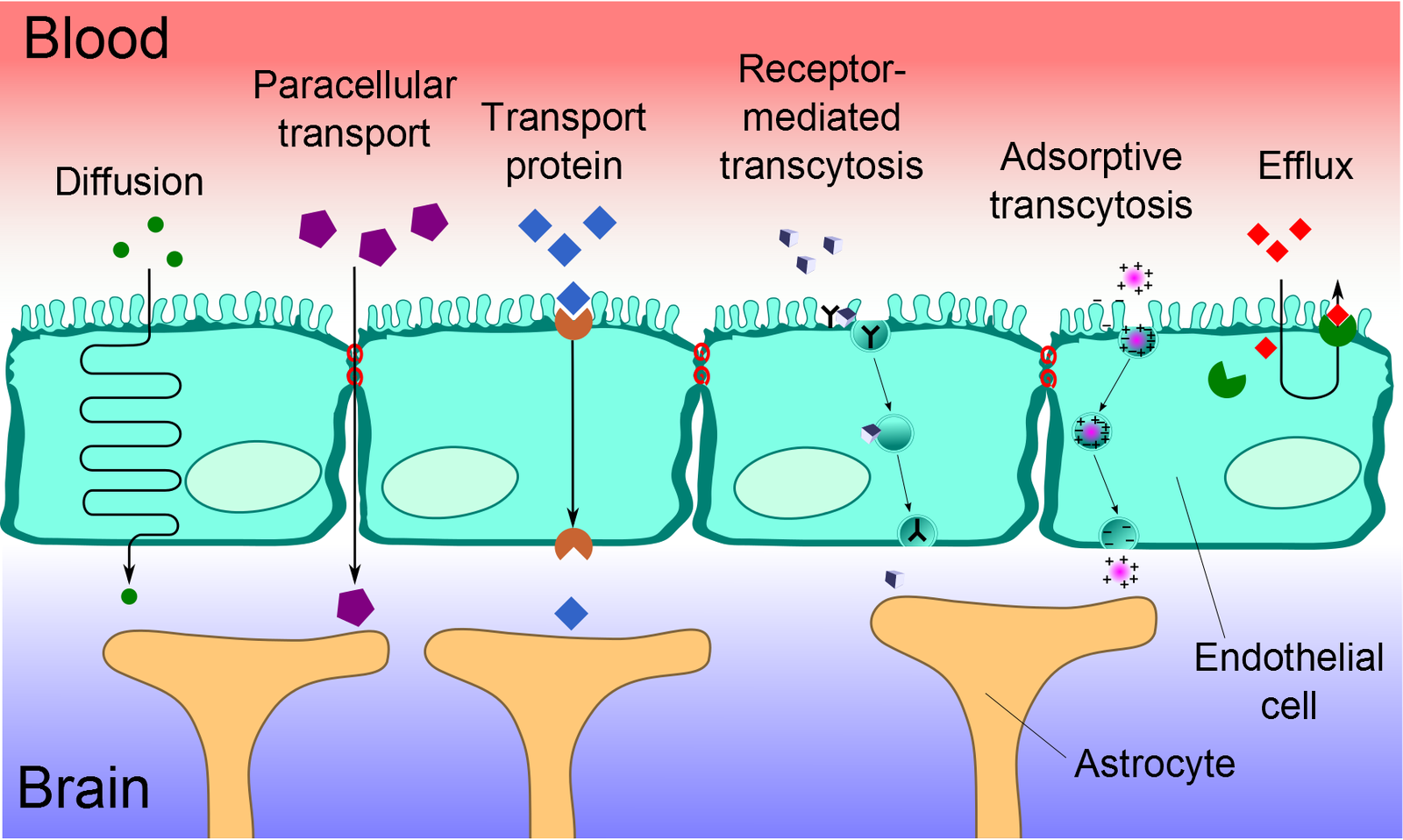
Activity against a neurological target in a cell assay does not establish that a compound can reach that target in the brain. A research group working with the US Air Force Research Laboratory investigated this exposure problem using machine-learning models of blood–brain barrier permeability. The NAM Journal study evaluates both categorical permeability and the continuous brain-to-blood concentration ratio.
The starting resource was B3DB, a curated collection of experimental barrier-permeability information from published studies. It contained 7,807 compounds with categorical labels and 1,058 with numerical LogBB values, the logarithm of the brain-to-blood concentration ratio. The investigators further standardized structures, removed unsuitable chemicals and resolved duplicate two-dimensional representations.
This processing left 3,968 unique compounds for classification: 2,447 labeled permeable and 1,521 nonpermeable. The numerical subset contained 917 compounds. Standardization also collapsed stereoisomers that the chosen two-dimensional representations would treat identically. The resulting dataset is therefore a specific modeling representation of the source chemistry, with stereochemical differences removed.
Consensus and Class Balancing Address Different Problems
The team combined seven models using majority voting. Six paired random-forest or gradient-boosting algorithms with structural fingerprints or calculated molecular properties. The seventh used Chemprop, a graph-neural-network framework that learns chemical representations from atoms and bonds. A scaffold-based split kept compounds with the same molecular core together, testing predictions on structures with cores absent from training.
Initial models generally identified permeable compounds more readily than nonpermeable ones. That imbalance mattered because permeable chemicals comprised about 62% of the classification data. Training adjustments improved specificity at some cost to sensitivity. The balanced consensus reached a balanced accuracy of 0.81 and receiver-operating-characteristic area of 0.89 on the scaffold split. Balanced accuracy gives equal weight to the two classes.
The investigators separately used disagreement among the seven models to flag uncertainty. A four-to-three vote was labeled inconclusive, rather than being presented as a reliable majority decision. In the scaffold test, this rule excluded 97 compounds, about 12% of the test set. Among the retained compounds, sensitivity increased from 0.86 to 0.89 and specificity from 0.76 to 0.79. The improvement thus came with reduced coverage.
Feature analysis associated lower polar surface area with greater predicted permeability. A separate search identified 88 recurring molecular fragments, many containing nitrogen rings. Together, those fragments occurred in 45% of the permeable compounds and had a positive predictive value of 0.94 within the analyzed dataset. Their coverage was limited: absence of one of these fragments could not supply a permeability prediction.
Continuous Exposure Prediction Remains More Difficult
The 917-compound LogBB dataset was concentrated near the middle of its numerical range, with relatively few poorly permeable chemicals. On the scaffold-based test, the best regression model was the graph neural network, with R² of 0.48 and mean squared error of 0.26. Averaging the regression models did not improve performance.
Most nonpermeable compounds in this test were misclassified as permeable when the predicted LogBB value was converted into a binary label. The authors therefore proposed classification first, followed by quantitative regression for the predicted-permeable subset. This is a proposed workflow for managing the regression model’s uneven performance; it does not supply equally reliable concentration-ratio estimates across the full chemical space.
Dopamine-Receptor Hits Illustrate the Screening Use
For an application example, the researchers retrieved compounds active in a published screen for antagonists of the human dopamine D2 receptor. After structural processing, 6,031 compounds remained. The consensus model classified 3,307 as permeable, 1,644 as nonpermeable and 1,080 as inconclusive. The nonpermeable group represented about 27% of the screened set.
These were model-based exposure classifications for existing assay hits. The study did not measure brain entry for the newly classified compounds. Fifty-two compounds also occurred in the modeling dataset; correct recovery of their labels provided a reuse check rather than an independent test of unfamiliar chemistry.
The study offers two useful distinctions for neurological drug screening: separating target activity from access to the brain, and separating a confident permeability category from a numerical exposure estimate. Its application can prioritize follow-up measurements while preserving uncertain calls. The results remain tied to the curated structures, experimental labels and chemical coverage used to develop the models.