
Review in Press Maps Therapy Tolerance, Persistence and Resistance in Cancer Organoids
An accepted review examines how patient-derived cancer organoids can distinguish reversible survival states from stable resistance. It connects longitudinal assays, cell-state changes and microenvironmental models with the practical limits of treatment selection.
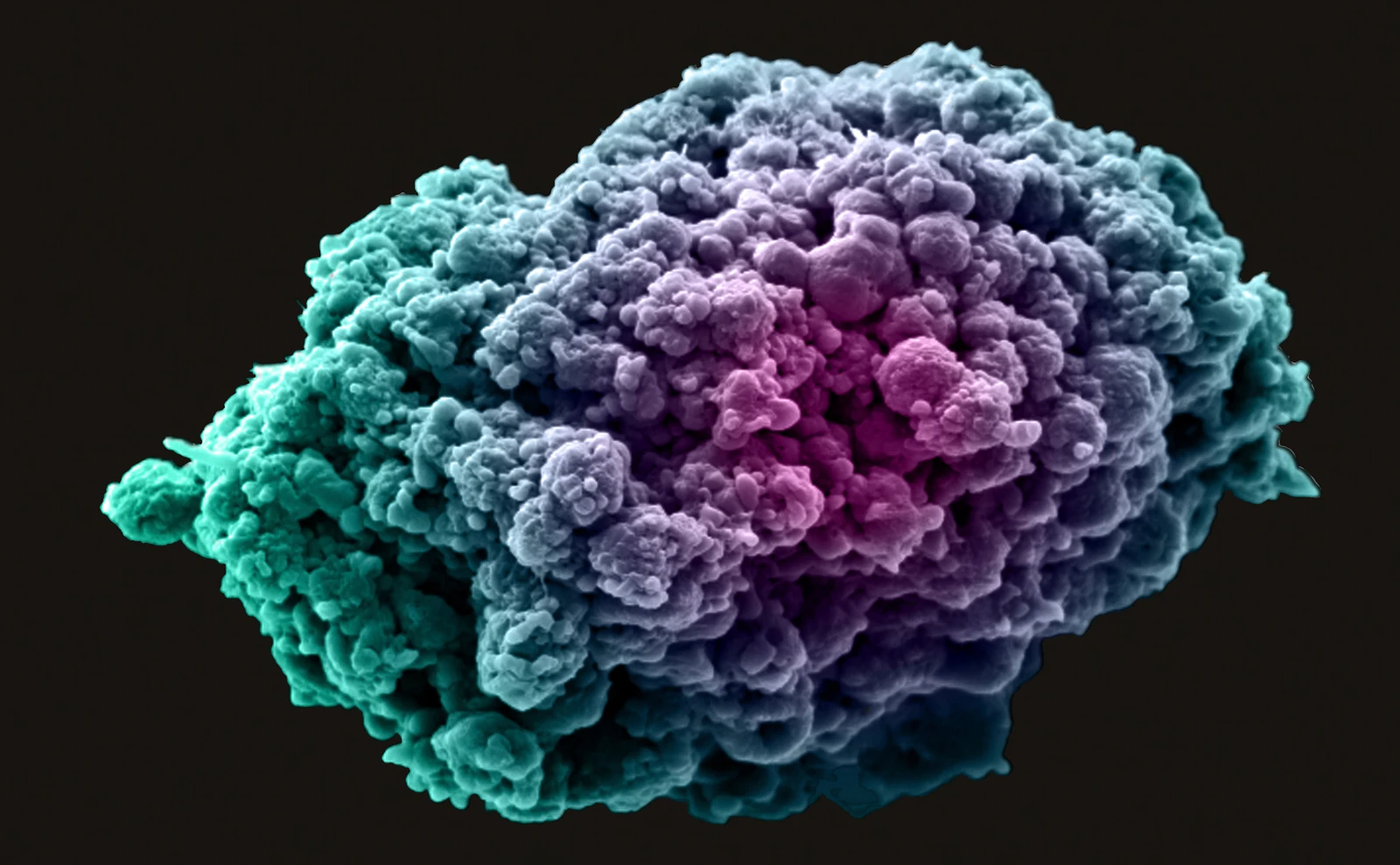
Survival States Need a Time Course
A review by researchers at Japan’s National Cancer Center, Hiroshima City Hiroshima Citizens Hospital and collaborating academic institutions examines patient-derived organoids (PDOs) as models of cancer cells that survive treatment. The Molecular Cancer article is an accepted article in press. Its framework separates therapy tolerance, persistence and stable resistance by asking how cells respond during exposure, after withdrawal and on renewed treatment.
The distinction matters for drug development. A small residual population may survive an initially effective treatment, change its state and later repopulate the culture. That outcome can call for a different intervention from one aimed at a population that continues growing despite the drug. The review organizes this problem around genetic background, cell-state plasticity, cell-cycle behavior and the tumor microenvironment.
These categories overlap biologically. Early tolerance describes adaptive survival; persistence usually concerns a residual fraction after prolonged, otherwise lethal exposure. Stable resistance requires evidence that the phenotype persists through drug-free passage or rechallenge. Survival at a single endpoint cannot establish reversibility or a non-genetic mechanism, and persistence does not inevitably progress to resistance.
What Organoids Reveal About Residual Cells
The review distinguishes dormancy, quiescence, senescence, stem-like states and epithelial–mesenchymal plasticity by their functional behavior. A marker panel can help characterize a population, but growth arrest, capacity to resume proliferation and response to a second exposure provide different information. Slow cycling is also an incomplete explanation of treatment survival: platinum drugs, for example, can injure cells outside active proliferation.
The cited PDO studies suggest several routes into and out of residual states. COL17A1-associated extracellular-matrix signaling through FAK and YAP can connect dormancy, reawakening and chemotherapy response. MEX3A-associated regenerative populations within LGR5-positive tumor compartments illustrate how a minority state may contribute to regrowth. Other examples distinguish early autophagy-related adaptation from PINK1-associated mitophagy or HNF4A-related programs in longer-lived persisters.
These examples come from different cancers, drugs and schedules. The review also discusses gastric-cancer resistance mechanisms involving MYOF, KHDRBS3 and PI3. They support drug- and context-specific hypotheses rather than a universal sequence of persister states. Organoid establishment itself can select clones or favor normal epithelial overgrowth, so tumor identity, passage history and the sampled lesion remain important when interpreting a drug response.
Rebuilding the Treatment Environment
Fibroblasts can change treatment response through deposited matrix, physical barriers and soluble factors such as HGF or FGF. Defined cocultures allow investigators to perturb these components individually. Air–liquid interface models can retain native immune populations for weeks, whereas autologous immune-cell addition provides a different, more controlled way to study tumor–immune interactions.
The review is more cautious about resistance generated directly by interactions among tumor-cell populations: the available support includes systems outside PDOs, and direct PDO evidence remains insufficient. Spatial pathology can identify a candidate resistant niche, but an organoid perturbation is needed to test whether its components actually change survival or regrowth.
Microfluidic systems add control over dosing, gradients and changing exposure. Their value depends on the concentration reaching the tissue. Protein binding, metabolism, clearance and retention within matrix can separate nominal well concentration from effective exposure. A programmed chip schedule reproduces selected exposure features; it does not supply whole-body pharmacokinetics automatically.
Assays That Can Find Regrowth
Bulk ATP assays average the response of the culture and can miss a small population capable of recovery. Growth-rate-adjusted measures help separate drug effects from differences in baseline proliferation, while repeated imaging can follow individual organoids through shrinkage, arrest and renewed growth. Washout and rechallenge add evidence about whether a surviving state is reversible, although drug retention in the matrix can complicate the timing.
Miniaturization can shorten assay turnaround and reduce tissue requirements. The review cites formats that yield results in about ten days, alongside clinical series with a median turnaround of six weeks in colorectal cancer and a mean of 6.8 weeks in pancreatic cancer. Faster formats may provide less biomass for molecular profiling or repeated sampling. Establishment rates of roughly 50–80% also depend on definitions and case mix, making both unsuccessful cultures and assay exclusions relevant to reported performance.
Longitudinal designs are particularly useful when the intended drug combination targets a transient surviving population. Measuring only initial killing can miss delayed regrowth; measuring only final size can hide the sequence that produced it. Dose, duration, sampling time and the recovery interval therefore belong to the biological interpretation of the result.
From Response Association to a Treatment Decision
The authors’ clinical-trial search, dated May 24, 2026, identified 71 candidate records and selected 49 involving epithelial cancers. These records map clinical activity around PDO testing; they do not establish that organoid-guided care improves outcomes. A test can correlate with treatment response while still lacking evidence that acting on its result benefits patients.
Prospective utility studies need to define the decision in advance, including whether the assay selects a treatment, rules one out or enriches a trial population. Excluding an option on an organoid result requires validation of the relevant negative predictive performance. Progression-free survival, overall survival, quality of life and the consequences of failed or delayed assays are separate outcomes. Paired normal-tissue organoids may estimate a relative therapeutic window, with systemic toxicity requiring complementary evidence.
The review proposes linking living biobanks, longitudinal measurements and spatial or molecular data. That integration will depend on traceable donor, lesion, passage, matrix and treatment metadata. Image-based artificial intelligence introduces further questions about site artifacts and domain shift. The resulting opportunity is to test a specific residual-cell hypothesis over time, then determine whether that experimental information improves a defined therapeutic decision.