
Targeted Prostate Biopsies Yield Organoids for a Three-Drug Comparison
An exploratory study established organoids from all 12 cancer-positive targeted biopsy samples, with nine growing sufficiently for downstream assays. Responses to enzalutamide, docetaxel and olaparib varied among the models.
Using Additional Targeted Cores as Model Material
A Nanjing Drum Tower Hospital team examined whether targeted prostate biopsies could supply enough tumor material for organoid culture and drug testing. The Annals of Medicine study focused on feasibility in primary prostate cancer, where a surgical specimen may not be available for model development.
Thirteen participants underwent standard systematic biopsy and MRI/ultrasound fusion-guided targeted biopsy. Two additional cores from the largest suspicious lesion were used for research. Twelve participants were diagnosed with prostate adenocarcinoma; one without detected tumor was excluded from further investigation.
Organoids were established from all 12 cancer-positive samples. Nine cultures proliferated sufficiently for subsequent pathological characterization, sequencing and drug screening. The other three were used for identification only.
Histology and Sequencing Supported the Tumor Relationship
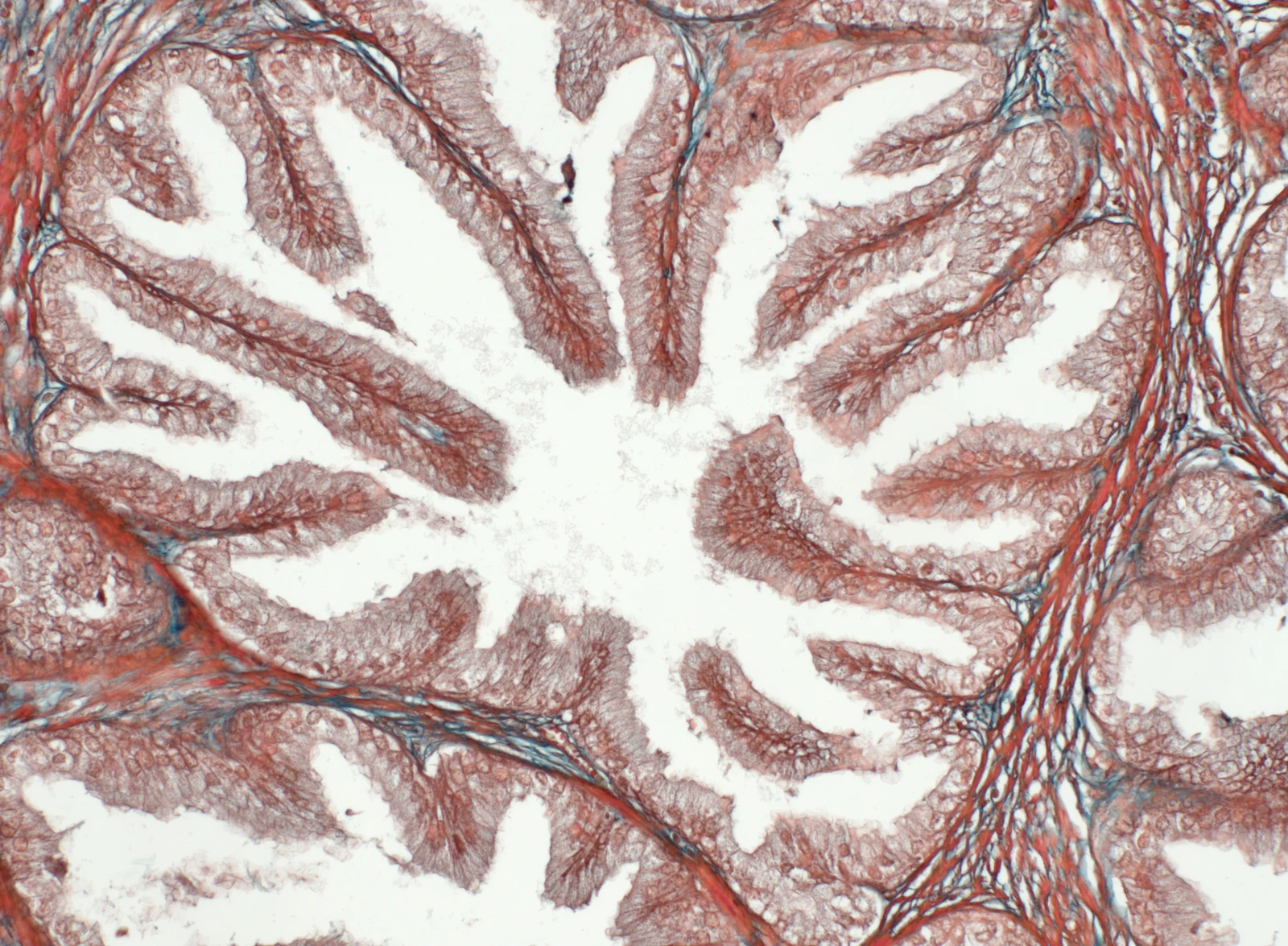
The cultures generally formed within four to ten days. They retained similar appearances over the reported early passages, although later growth was slower and structures were smaller. H&E staining showed atypical glandular and cellular features, and cytokeratin and androgen-receptor staining were consistent with the corresponding biopsy specimens.
Whole-exome analysis compared organoids and parental tumor with matched normal blood. Many somatic mutations were retained, and the study reported similarities in base-substitution and copy-number patterns. These comparisons support a relationship between the biopsy-derived cultures and their source tumors.
Drug Responses Differed Across the Nine Proliferative Models
The investigators compared enzalutamide, docetaxel and olaparib, representing androgen-receptor-directed therapy, chemotherapy and PARP inhibition. Organoids were plated in a matrix-containing 384-well format and cultured for 48 hours before drug addition. Viability was assessed with CellTiter-Glo 3D after a further 96 hours.
Enzalutamide and docetaxel were tested over 0.0032–10 μM, and olaparib over 0.0039–4 μM. Dose-response curves showed heterogeneity across models. One model responded relatively poorly to both enzalutamide and docetaxel but better to olaparib; another responded to docetaxel while showing a weaker enzalutamide response.
These comparisons demonstrate that the cultures can generate distinct pharmacological profiles from limited biopsy material. The study did not compare those profiles with the patients’ clinical drug responses, so the observed differences remain preclinical findings.
Growth and Sampling Remain Practical Constraints
The cohort was small, and stable, sustained passaging remained difficult. Taking only two additional cores limited tissue yield, while obtaining more cores would add to the sampling burden. The study also selected targeted lesions and did not test whether systematic biopsy cores would give comparable establishment rates or drug profiles.
The assays show the feasibility of generating distinct drug profiles from limited targeted-biopsy material. Stable expansion, performance with other sampling approaches and concordance with patients’ treatment responses remain unresolved.