Approaches & Applications

Organ-on-Chip in Drug Research

Organ-on-chip and microphysiological systems for drug exposure, tissue interactions and human-relevant evaluation.

This collection covers organ-on-chip and related microphysiological systems used in drug research. Topics include tissue interfaces, exposure and transport, interactions between tissue models, and measurements of drug response.

The studies use different tissues, materials and experimental formats. Coverage identifies what each system was tested for and how its results were compared with a reference. Related method profiles bring together the model design, measurements and published validation evidence.

Research & Analysis

NIH Transporter Network Brings NAMs to Early-Life Exposure Questions

A four-center NIH network is studying transporters in the placenta, mammary gland, pediatric intestine and brain. Its published overview describes how organoids, microphysiological systems and computational models contribute to that research strategy.

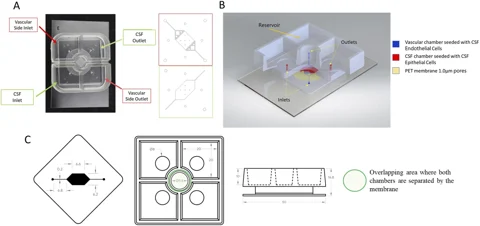
A Human Blood–CSF Barrier Chip Tracks PEG Distribution and Drug Transport

A two-compartment chip assembled from human primary cells maintained a measurable blood–cerebrospinal fluid barrier for up to 15 days. Its first applications compared the distribution of free PEG species and transport of two reference drugs; the latter comparison does not yet establish broad predictive performance.